Here’s something that doesn’t get talked about nearly enough in the development sector: some of the most practical, genuinely useful international cooperation programs aren’t the massive EU-funded megaprojects or the headline-grabbing bilateral deals. Sometimes, the most impactful work happens through smaller, focused programs where real experts from one country sit down with real professionals from another and actually share what they know.
That’s the entire spirit behind the Sharing Slovak Expertise (SSE) program for Ukraine in 2026 — and right now, it’s open for applications, with a deadline of June 30, 2026.
If you’re a Ukrainian professional, NGO, public institution, or local authority with a genuine need for practical knowledge transfer and capacity building, this program was built with you in mind. Let me walk you through everything.
What Is the Sharing Slovak Expertise Program?
First, the essentials.
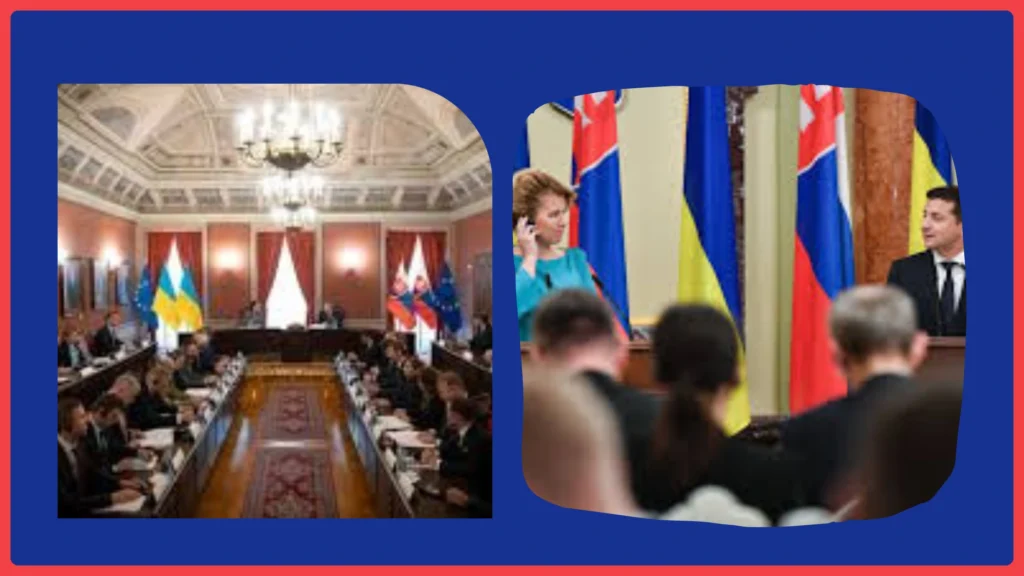
The Sharing Slovak Expertise (SSE) program is an official tool of Slovak Official Development Assistance (ODA), managed by the Slovak Agency for International Development Cooperation (SAIDC) and implemented in Ukraine through the Embassy of the Slovak Republic in Kyiv.
The concept is elegantly simple: Slovakia has developed real, hard-won expertise in governance reform, public administration modernization, EU integration, and institutional capacity building — all things that Ukraine needs deeply right now. SSE creates structured pathways for that expertise to flow from Slovakia to Ukraine.
This isn’t aid in the traditional sense of money handed over to fund a project. It’s something more interesting and arguably more sustainable: knowledge transfer. Slovak experts come to Ukraine. Ukrainian professionals go to Slovakia. Small groups do study visits. Ideas move. Institutions get stronger.
And in the context of Ukraine’s current reconstruction and EU integration journey, that kind of targeted expertise sharing has genuine strategic value.
The Two Programs Running in Parallel
It’s worth clarifying something that can cause confusion: there are actually two related but distinct Slovak programs currently open for Ukraine in 2026. Understanding the difference helps you figure out which one is right for you.
| Feature | Sharing Slovak Expertise (SSE) | Small Grants Program |
|---|---|---|
| Focus | Knowledge transfer, capacity building, expert exchange | Small-scale development projects |
| Activities | Internships, study visits, expert missions | Project implementation across priority sectors |
| Duration | Up to 2 weeks (internships), 5 days (visits) | 6 to 12 months |
| Max Grant | Not specified (activity-based) | €10,000 per project |
| Deadline | June 30, 2026 | June 15, 2026 |
| Who Applies | Ukrainian professionals, NGOs, public bodies | NGOs, non-commercial entities, local authorities |
| Submission | Embassy of the Slovak Republic in Kyiv | Email + hard copy to Embassy in Kyiv |
Both programs are managed by SAIDC through the Embassy in Kyiv. If your needs involve knowledge exchange and professional development, SSE is your path. If you have a defined local development project to implement, the Small Grants program is the better fit — and the earlier deadline (June 15) applies there.
The Three Types of SSE Activities
The Sharing Slovak Expertise program supports three distinct models of knowledge exchange. Each serves a different purpose and audience.
1. Internships in Slovakia
Ukrainian public servants and professionals travel to Slovakia for an intensive professional exchange of up to two weeks. This isn’t a tourism trip — it’s structured professional immersion, with networking, knowledge exchange, and relationship building at the center.
Who is this for? Public servants and professionals who would benefit from firsthand exposure to how Slovak institutions function, particularly around governance reform, EU integration processes, or public administration modernization.
2. Study Visits to Slovakia
Small groups of up to six participants — professionals, experts, and public administration representatives from Ukraine — travel to Slovakia for up to five days (excluding travel time). They participate in professional meetings with Slovak counterparts, observe Slovak practices in action, and build the relationships that support ongoing bilateral cooperation.
This format works particularly well for teams working on specific reform areas who want to understand how Slovakia handled similar challenges during its own post-communist transition and EU accession process.
3. Slovak Expert Visits to Ukraine
Instead of Ukrainians going to Slovakia, this flips the model: Slovak experts come to Ukraine for up to five days (excluding travel) to provide direct knowledge exchange, training, and professional guidance on-site.
This is often the most logistically accessible option for Ukrainian institutions that can’t easily send staff abroad, and it allows Slovak expertise to be delivered directly in the context where it will be applied.
What Topics and Sectors Can Projects Cover?
The SSE program is built around areas where Slovakia has genuine comparative advantages — not just general development themes, but specific areas where Slovak experience is directly relevant to Ukraine’s current needs.
Priority areas include:
- Governance reforms and public administration — Slovakia’s own post-communist institutional transformation is directly relevant to Ukraine’s reform agenda
- EU integration processes — Slovakia is a full EU member with direct experience navigating accession; Ukraine’s EU candidacy makes this particularly timely
- DCFTA implementation — the Deep and Comprehensive Free Trade Area agreement between Ukraine and the EU
- Good governance and rule of law
- Digital transformation and e-government
- Energy security and sustainability
- Education and capacity building
- Healthcare systems
- Environmental sustainability
- Food security and agriculture
- Market economy development and SME support
Crucially, proposals should focus on topics with real impact and added value — and ideally should connect to ongoing or already-implemented Slovak ODA projects in Ukraine. This isn’t a program for abstract capacity-building exercises. It’s for practical, applied knowledge transfer with measurable outcomes.
The Small Grants Program — Priority Sectors Explained
For those applying to the Small Grants track rather than SSE, the priority sectors are defined by Slovakia’s Medium-Term Strategy for Development Cooperation 2025–2030:
Infrastructure and natural resources Improving water, waste, energy, and environmental sustainability, including disaster risk reduction.
Food safety and agriculture Strengthening food systems, agricultural productivity, and sustainable ecosystem use.
Market environment support Promoting small and medium-sized enterprises, innovation, job creation, and responsible business.
Good health Improving healthcare access, prevention, and workforce capacity, with a focus on vulnerable groups.
Quality education Enhancing education systems, vocational skills, and learning infrastructure.
Good governance and civil society Strengthening institutions, rule of law, local governance, and citizen participation.
Every project must also integrate two cross-cutting themes: environmental/climate action and gender equality. These aren’t optional additions — they’re mandatory components of every proposal. Applications that negatively affect either theme will not be approved.
Who Can Apply?
For Sharing Slovak Expertise (SSE):
- Professionals, experts, and representatives from Ukrainian government and public administration
- Non-governmental organizations and civil society actors
- Institutions from both government and non-government sectors
For Small Grants:
- Registered non-commercial legal entities
- Non-governmental organizations (NGOs)
- Local or regional authorities
A key note on nationality: both programs are specifically focused on Ukraine as the partner country. Applicants must be operating in Ukraine and implementing projects that benefit Ukrainian communities and institutions.
How to Apply — Step by Step
For SSE:
- Develop your proposal — focus on a specific knowledge gap that Slovak expertise can meaningfully address; be concrete about the activity type (internship, study visit, or expert mission)
- Align with SAIDC priorities — check that your topic falls within approved sectors and connects to Slovak comparative advantages
- Prepare your application form and all required annexes
- Include signed consent for personal data processing
- Submit both electronically and in hard copy to the Embassy of the Slovak Republic in Kyiv
- Email: emb.kiev@mzv.sk
- Address: Yaroslaviv Val St 34, 01901 Kyiv, Ukraine
- Submit before June 30, 2026
For Small Grants (earlier deadline — June 15, 2026):
Required documents:
- Completed Application for Financial Contribution (Word template available)
- Financial report template (Excel)
- Data subject consent form
- All supporting documentation
Submit both electronically (emb.kiev@mzv.sk) and in hard copy to the Embassy address above. Late applications will not be considered.
FAQs — The Key Questions Answered
Q: Can documents be submitted in Ukrainian? According to the FAQ on the Small Grants call, attached documents can be in the Ukrainian language. Verify this for SSE proposals by contacting the Embassy directly.
Q: What is the maximum budget for Small Grants? €10,000 per project.
Q: How long do Small Grant projects run? Between 6 and 12 months. Implementation starts immediately after the Small Grant Agreement enters into force.
Q: How are grant installments paid? Payment details and ratios are specified in the official guidance documents and the Small Grant Agreement template — download both from the Embassy’s call page.
Q: What happens if circumstances change during implementation? The FAQ notes a process for managing changes within project implementation. Contact the Embassy at emb.kiev@mzv.sk to discuss specific situations.
Q: Can the same organization apply for both SSE and Small Grants? The programs are distinct tools with different objectives. It’s worth consulting the Embassy about whether dual applications are permissible.
Q: Is this program connected to Ukraine’s EU integration? Very directly. The SSE program explicitly covers DCFTA implementation, EU Association Agreement support, and governance reform — all central to Ukraine’s EU candidacy journey.
Why This Program Matters Right Now
Let me be straightforward about the context here.
Ukraine is going through a period of extraordinary complexity — rebuilding infrastructure, continuing governance reforms, advancing EU candidacy, and strengthening civil society, all simultaneously and under immense pressure. International cooperation programs like SSE aren’t just nice-to-have gestures. They’re part of the institutional scaffolding that makes sustainable recovery possible.
Slovakia’s relevance to Ukraine’s situation is not accidental. Slovakia itself made a post-communist transition, navigated the process of EU accession, implemented governance reforms under significant pressure, and built institutions that now function as full EU member state institutions. That experience is directly, practically applicable to where Ukraine is now.
When a Slovak expert sits down with a Ukrainian public administrator to discuss how Slovakia reformed its public procurement system, or how it managed the transition to EU-aligned environmental standards, or how it built up its e-government infrastructure — that’s not abstract development theory. It’s hard experience from someone who went through a comparable process a generation ago.
That’s what makes SSE genuinely valuable, beyond the funding mechanics.
Useful Contacts and Resources
- SAIDC (Slovak Agency for International Development Cooperation) Website: https://slovakaid.sk/sse-sharing-slovak-expertise/?lang=en
- Address: Palisády 7052/29, 811 06 Bratislava Tel: +421-2-3213-2610 / +421-2-3213-2605
- Embassy of the Slovak Republic in Kyiv (Contact Point for Ukraine) Address: Yaroslaviv Val St 34, 01901 Kyiv, Ukraine Email: emb.kiev@mzv.sk
Key Deadlines at a Glance
| Program | Deadline | Implementation By |
|---|---|---|
| Sharing Slovak Expertise (SSE) | June 30, 2026 | October 31, 2026 |
| Small Grants Ukraine 2026 | June 15, 2026 | 6–12 months from agreement |
The Bottom Line
The Sharing Slovak Expertise program for Ukraine 2026 and the companion Small Grants call represent two focused, practical, and genuinely meaningful pathways for Ukrainian institutions, NGOs, and professionals to access Slovak expertise and development funding during a critical period.
SSE is about people and knowledge — internships, study visits, expert missions that transfer real experience from Slovakia to Ukraine and back. Small Grants are about projects — up to €10,000 to implement defined development activities across six priority sectors.
Both programs are administered through the Slovak Embassy in Kyiv. Both require both electronic and hard copy submissions. And both have deadlines in June 2026 — June 15 for Small Grants, June 30 for SSE.
If your work touches governance, education, healthcare, energy, agriculture, market development, or public administration — and you’re operating in Ukraine — there’s almost certainly an angle here worth exploring.
Apply to: emb.kiev@mzv.sk + hard copy to Yaroslaviv Val St 34, 01901 Kyiv SSE Deadline: June 30, 2026 Small Grants Deadline: June 15, 2026 More info: slovakaid.sk or contact the Embassy in Kyiv
Know a Ukrainian NGO, municipality, or professional who should be applying for this? Share this guide with them. The June deadlines will arrive faster than expected — and the organizations that apply early are the ones that apply well.