• Skip to primary navigation
  • Skip to main content

CHEVENING SCHOLARSHIP

  • SCHOLARSHIPS
  • FELLOWSHIPS
  • Internships
  • GUIDES

SCHOLARSHIPS

Sharing Slovak Expertise 2026 (Ukraine): Your Complete Guide to This Game-Changing Grant Program

April 11, 2026 by Amina Shah

Here’s something that doesn’t get talked about nearly enough in the development sector: some of the most practical, genuinely useful international cooperation programs aren’t the massive EU-funded megaprojects or the headline-grabbing bilateral deals. Sometimes, the most impactful work happens through smaller, focused programs where real experts from one country sit down with real professionals from another and actually share what they know.

That’s the entire spirit behind the Sharing Slovak Expertise (SSE) program for Ukraine in 2026 — and right now, it’s open for applications, with a deadline of June 30, 2026.

If you’re a Ukrainian professional, NGO, public institution, or local authority with a genuine need for practical knowledge transfer and capacity building, this program was built with you in mind. Let me walk you through everything.

What Is the Sharing Slovak Expertise Program?

First, the essentials.

The Sharing Slovak Expertise (SSE) program is an official tool of Slovak Official Development Assistance (ODA), managed by the Slovak Agency for International Development Cooperation (SAIDC) and implemented in Ukraine through the Embassy of the Slovak Republic in Kyiv.

The concept is elegantly simple: Slovakia has developed real, hard-won expertise in governance reform, public administration modernization, EU integration, and institutional capacity building — all things that Ukraine needs deeply right now. SSE creates structured pathways for that expertise to flow from Slovakia to Ukraine.

This isn’t aid in the traditional sense of money handed over to fund a project. It’s something more interesting and arguably more sustainable: knowledge transfer. Slovak experts come to Ukraine. Ukrainian professionals go to Slovakia. Small groups do study visits. Ideas move. Institutions get stronger.

And in the context of Ukraine’s current reconstruction and EU integration journey, that kind of targeted expertise sharing has genuine strategic value.
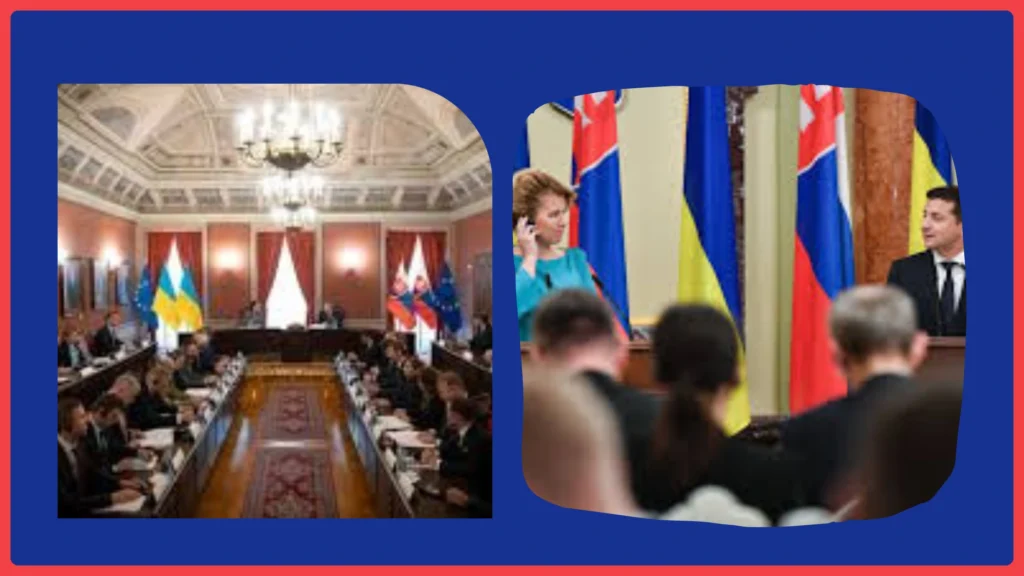
Slovak Ukrainian professional exchange Kyiv institutional setting or bilateral cooperation context here

The Two Programs Running in Parallel

It’s worth clarifying something that can cause confusion: there are actually two related but distinct Slovak programs currently open for Ukraine in 2026. Understanding the difference helps you figure out which one is right for you.

FeatureSharing Slovak Expertise (SSE)Small Grants Program
FocusKnowledge transfer, capacity building, expert exchangeSmall-scale development projects
ActivitiesInternships, study visits, expert missionsProject implementation across priority sectors
DurationUp to 2 weeks (internships), 5 days (visits)6 to 12 months
Max GrantNot specified (activity-based)€10,000 per project
DeadlineJune 30, 2026June 15, 2026
Who AppliesUkrainian professionals, NGOs, public bodiesNGOs, non-commercial entities, local authorities
SubmissionEmbassy of the Slovak Republic in KyivEmail + hard copy to Embassy in Kyiv

Both programs are managed by SAIDC through the Embassy in Kyiv. If your needs involve knowledge exchange and professional development, SSE is your path. If you have a defined local development project to implement, the Small Grants program is the better fit — and the earlier deadline (June 15) applies there.

The Three Types of SSE Activities

The Sharing Slovak Expertise program supports three distinct models of knowledge exchange. Each serves a different purpose and audience.

1. Internships in Slovakia

Ukrainian public servants and professionals travel to Slovakia for an intensive professional exchange of up to two weeks. This isn’t a tourism trip — it’s structured professional immersion, with networking, knowledge exchange, and relationship building at the center.

Who is this for? Public servants and professionals who would benefit from firsthand exposure to how Slovak institutions function, particularly around governance reform, EU integration processes, or public administration modernization.

2. Study Visits to Slovakia

Small groups of up to six participants — professionals, experts, and public administration representatives from Ukraine — travel to Slovakia for up to five days (excluding travel time). They participate in professional meetings with Slovak counterparts, observe Slovak practices in action, and build the relationships that support ongoing bilateral cooperation.

This format works particularly well for teams working on specific reform areas who want to understand how Slovakia handled similar challenges during its own post-communist transition and EU accession process.

3. Slovak Expert Visits to Ukraine

Instead of Ukrainians going to Slovakia, this flips the model: Slovak experts come to Ukraine for up to five days (excluding travel) to provide direct knowledge exchange, training, and professional guidance on-site.

This is often the most logistically accessible option for Ukrainian institutions that can’t easily send staff abroad, and it allows Slovak expertise to be delivered directly in the context where it will be applied.

What Topics and Sectors Can Projects Cover?

The SSE program is built around areas where Slovakia has genuine comparative advantages — not just general development themes, but specific areas where Slovak experience is directly relevant to Ukraine’s current needs.

Priority areas include:

  • Governance reforms and public administration — Slovakia’s own post-communist institutional transformation is directly relevant to Ukraine’s reform agenda
  • EU integration processes — Slovakia is a full EU member with direct experience navigating accession; Ukraine’s EU candidacy makes this particularly timely
  • DCFTA implementation — the Deep and Comprehensive Free Trade Area agreement between Ukraine and the EU
  • Good governance and rule of law
  • Digital transformation and e-government
  • Energy security and sustainability
  • Education and capacity building
  • Healthcare systems
  • Environmental sustainability
  • Food security and agriculture
  • Market economy development and SME support

Crucially, proposals should focus on topics with real impact and added value — and ideally should connect to ongoing or already-implemented Slovak ODA projects in Ukraine. This isn’t a program for abstract capacity-building exercises. It’s for practical, applied knowledge transfer with measurable outcomes.

The Small Grants Program — Priority Sectors Explained

For those applying to the Small Grants track rather than SSE, the priority sectors are defined by Slovakia’s Medium-Term Strategy for Development Cooperation 2025–2030:

Infrastructure and natural resources Improving water, waste, energy, and environmental sustainability, including disaster risk reduction.

Food safety and agriculture Strengthening food systems, agricultural productivity, and sustainable ecosystem use.

Market environment support Promoting small and medium-sized enterprises, innovation, job creation, and responsible business.

Good health Improving healthcare access, prevention, and workforce capacity, with a focus on vulnerable groups.

Quality education Enhancing education systems, vocational skills, and learning infrastructure.

Good governance and civil society Strengthening institutions, rule of law, local governance, and citizen participation.

Every project must also integrate two cross-cutting themes: environmental/climate action and gender equality. These aren’t optional additions — they’re mandatory components of every proposal. Applications that negatively affect either theme will not be approved.
Ukrainian NGO meeting professional development workshop or Slovak Ukrainian institutional setting here

Who Can Apply?

For Sharing Slovak Expertise (SSE):

  • Professionals, experts, and representatives from Ukrainian government and public administration
  • Non-governmental organizations and civil society actors
  • Institutions from both government and non-government sectors

For Small Grants:

  • Registered non-commercial legal entities
  • Non-governmental organizations (NGOs)
  • Local or regional authorities

A key note on nationality: both programs are specifically focused on Ukraine as the partner country. Applicants must be operating in Ukraine and implementing projects that benefit Ukrainian communities and institutions.

How to Apply — Step by Step

For SSE:

  1. Develop your proposal — focus on a specific knowledge gap that Slovak expertise can meaningfully address; be concrete about the activity type (internship, study visit, or expert mission)
  2. Align with SAIDC priorities — check that your topic falls within approved sectors and connects to Slovak comparative advantages
  3. Prepare your application form and all required annexes
  4. Include signed consent for personal data processing
  5. Submit both electronically and in hard copy to the Embassy of the Slovak Republic in Kyiv
    • Email: emb.kiev@mzv.sk
    • Address: Yaroslaviv Val St 34, 01901 Kyiv, Ukraine
  6. Submit before June 30, 2026

For Small Grants (earlier deadline — June 15, 2026):

Required documents:

  • Completed Application for Financial Contribution (Word template available)
  • Financial report template (Excel)
  • Data subject consent form
  • All supporting documentation

Submit both electronically (emb.kiev@mzv.sk) and in hard copy to the Embassy address above. Late applications will not be considered.

FAQs — The Key Questions Answered

Q: Can documents be submitted in Ukrainian? According to the FAQ on the Small Grants call, attached documents can be in the Ukrainian language. Verify this for SSE proposals by contacting the Embassy directly.

Q: What is the maximum budget for Small Grants? €10,000 per project.

Q: How long do Small Grant projects run? Between 6 and 12 months. Implementation starts immediately after the Small Grant Agreement enters into force.

Q: How are grant installments paid? Payment details and ratios are specified in the official guidance documents and the Small Grant Agreement template — download both from the Embassy’s call page.

Q: What happens if circumstances change during implementation? The FAQ notes a process for managing changes within project implementation. Contact the Embassy at emb.kiev@mzv.sk to discuss specific situations.

Q: Can the same organization apply for both SSE and Small Grants? The programs are distinct tools with different objectives. It’s worth consulting the Embassy about whether dual applications are permissible.

Q: Is this program connected to Ukraine’s EU integration? Very directly. The SSE program explicitly covers DCFTA implementation, EU Association Agreement support, and governance reform — all central to Ukraine’s EU candidacy journey.

Why This Program Matters Right Now

Let me be straightforward about the context here.

Ukraine is going through a period of extraordinary complexity — rebuilding infrastructure, continuing governance reforms, advancing EU candidacy, and strengthening civil society, all simultaneously and under immense pressure. International cooperation programs like SSE aren’t just nice-to-have gestures. They’re part of the institutional scaffolding that makes sustainable recovery possible.

Slovakia’s relevance to Ukraine’s situation is not accidental. Slovakia itself made a post-communist transition, navigated the process of EU accession, implemented governance reforms under significant pressure, and built institutions that now function as full EU member state institutions. That experience is directly, practically applicable to where Ukraine is now.

When a Slovak expert sits down with a Ukrainian public administrator to discuss how Slovakia reformed its public procurement system, or how it managed the transition to EU-aligned environmental standards, or how it built up its e-government infrastructure — that’s not abstract development theory. It’s hard experience from someone who went through a comparable process a generation ago.

That’s what makes SSE genuinely valuable, beyond the funding mechanics.

Useful Contacts and Resources

  • SAIDC (Slovak Agency for International Development Cooperation) Website: https://slovakaid.sk/sse-sharing-slovak-expertise/?lang=en
  • Address: Palisády 7052/29, 811 06 Bratislava Tel: +421-2-3213-2610 / +421-2-3213-2605
  • Embassy of the Slovak Republic in Kyiv (Contact Point for Ukraine) Address: Yaroslaviv Val St 34, 01901 Kyiv, Ukraine Email: emb.kiev@mzv.sk

Key Deadlines at a Glance

ProgramDeadlineImplementation By
Sharing Slovak Expertise (SSE)June 30, 2026October 31, 2026
Small Grants Ukraine 2026June 15, 20266–12 months from agreement

Chevening Scholarships 2026

The Bottom Line

The Sharing Slovak Expertise program for Ukraine 2026 and the companion Small Grants call represent two focused, practical, and genuinely meaningful pathways for Ukrainian institutions, NGOs, and professionals to access Slovak expertise and development funding during a critical period.

SSE is about people and knowledge — internships, study visits, expert missions that transfer real experience from Slovakia to Ukraine and back. Small Grants are about projects — up to €10,000 to implement defined development activities across six priority sectors.

Both programs are administered through the Slovak Embassy in Kyiv. Both require both electronic and hard copy submissions. And both have deadlines in June 2026 — June 15 for Small Grants, June 30 for SSE.

If your work touches governance, education, healthcare, energy, agriculture, market development, or public administration — and you’re operating in Ukraine — there’s almost certainly an angle here worth exploring.

Apply to: emb.kiev@mzv.sk + hard copy to Yaroslaviv Val St 34, 01901 Kyiv SSE Deadline: June 30, 2026 Small Grants Deadline: June 15, 2026 More info: slovakaid.sk or contact the Embassy in Kyiv

Know a Ukrainian NGO, municipality, or professional who should be applying for this? Share this guide with them. The June deadlines will arrive faster than expected — and the organizations that apply early are the ones that apply well.

Filed Under: SCHOLARSHIPS

Yale SOM Scholarships: The Complete Guide for International Students

April 9, 2026 by Amina Shah

Let me be real with you for a second. The moment you see Yale School of Management’s tuition — $91,400 just for 2026–27 — your eyes probably go wide. That’s before rent, groceries, health insurance, or the occasional overpriced coffee in New Haven.

But here’s the thing most applicants don’t realize: Yale SOM doesn’t just accept you and send you a tuition bill with a polite “good luck.” The school awarded over $7.8 million in scholarship grants to incoming MBA students in 2024 alone. And yes — if you’re an international student reading this from Lagos, Mumbai, or Mexico City — a significant portion of that money is available to you.

So let’s break it all down. Scholarships, fellowships, loan forgiveness, the works.

Why Yale SOM Is Worth the Investment (Even Before the Scholarships)

Before we get into the money stuff, let’s appreciate what you’re actually paying for. Yale SOM isn’t just a traditional business school. Its mission — educating leaders for business and society — sounds like marketing speak until you actually dig into what that means.

The school runs a Loan Forgiveness Program that has existed since 1986 — making it literally the first of its kind among business schools. Hundreds of graduates who went into nonprofit or government work have had their loans significantly covered. That’s not a footnote; that’s a structural commitment to letting you follow your conscience, not just your salary.

And with a total 2026–27 cost of attendance of around $128,976 for a single student, funding matters. A lot.

Yale SOM Scholarship Awards: What’s on the Table

Yale SOM awards scholarships after admission, through a supplemental application process. If you get in and don’t complete that scholarship application, you’re leaving real money on the table. Simple as that.

Here’s a breakdown of the main scholarship categories:

1. Dean’s Scholarship

The flagship merit award. This one is purely about the strength of your candidacy — your achievements, your potential, your overall profile. No specific demographic requirement; it’s the school’s way of saying “we really want you here.”

2. Aspire Fellowship

This is the one I find most compelling to write about. The Aspire Fellowship is specifically designed for candidates from economically disadvantaged backgrounds.

Take Jason Rondinelli, a ’27 student who grew up in a low-income household in Pennsylvania’s Rust Belt, spent over two decades as a public school teacher, and came to Yale SOM at 45. The fellowship didn’t just cover tuition costs — it made the entire thing possible. His story is a perfect example of what this award actually does for people.

If you grew up low-income, come from an unconventional professional background, or are a non-traditional student in any way, this fellowship is for you. Don’t self-select out.

3. Consortium Fellowship

Yale SOM is a member of the Consortium for Graduate Study in Management, an organization dedicated to increasing underrepresented minority representation in business education. Consortium Fellows receive significant grant aid and access to a powerful alumni network.

4. Forté Fellow

Forté is a nonprofit focused on advancing women in business. Yale SOM’s Forté Fellows receive merit-based scholarship support and join a community of women MBAs across the country.

5. Yale Scholarships for Entrepreneurs

If you’ve built something — or plan to — this one’s worth knowing about. It targets candidates with entrepreneurial intent and backgrounds.

6. Yale Africa Impact Scholarship

Specifically for students from Sub-Saharan Africa with a clear vision for impact on the continent. This is one of the more targeted awards and reflects Yale SOM’s genuine interest in global, emerging-market leadership.

7. Yale-FUNED Scholarship for Students from Mexico

A partnership between Yale and FUNED (Fundación Mexicana para la Educación, la Tecnología y la Ciencia). If you’re a Mexican national, this is worth your full attention.

8. Global Leaders from India MBA Scholarship

Exactly what it sounds like. Strong merit-based award for Indian applicants with standout profiles.

9. Yale-Reaching OUT LGBT MBA Fellowship

For LGBTQ+ MBA candidates, in partnership with the Reaching OUT MBA organization. Merit-based, with a community and networking component.

The Scholarship Application Process: Step by Step

Here’s how it actually works — no fluff:

Step 1: Get admitted. Scholarships are only available post-admission. You can’t apply for funding before receiving your offer.

Step 2: Complete the supplemental scholarship application. This is a separate, short application. Yale SOM describes its scholarship process as “holistic” — driven largely by the merits of your candidacy, but also by the context of your achievements. The supplemental lets you share things that may not have been fully captured in your admissions application.

Step 3: Present relevant circumstances. The school explicitly says additional considerations may be relevant to your scholarship award that didn’t factor into admissions. Use this space. Be specific about your background, your financial situation, and your goals.

Step 4: Wait for decisions. Most scholarships are awarded for both years of the MBA program, unless specifically stated otherwise.

Note for joint degree students: Aid is awarded by each school in which you’re in-residence per semester. You’ll need to consult financial aid officers at both schools.

For International Students: What You Need to Know

International students sometimes assume they’re categorically less eligible for financial support. At Yale SOM, that’s genuinely not the case.

  • International students are eligible for most scholarship awards, including merit-based ones.
  • The Loan Forgiveness Program explicitly includes international students. Non-US salaries are converted using World Bank Purchasing Power Parity (PPP) rates, which is actually a smart approach to making the program equitable across economies.
  • Need-based calculations for internationals use an equivalent need determination (rather than FAFSA, which is US-only).

If you’re international, contact the Office of Financial Aid directly to ask about loan eligibility — they have specific guidance for non-US students.

The Loan Forgiveness Program: A Hidden Gem

Even if you don’t land a large scholarship, Yale SOM’s Loan Forgiveness Program could dramatically change the financial calculus of your MBA — especially if you want to work in public service, nonprofits, or government.

Here’s how it works:

Annual Income (MBA/EMBA/MAM/MMS)Coverage
Up to $92,000 USD equivalent1/10 of eligible loan principal per year
$92,000 – $120,000 USD equivalentPro-rated support
$120,000+Ineligible

The program runs for 10 years post-graduation, covers graduates employed full-time by government organizations or nonprofit 501(c)(3) equivalents, and is available to alumni of MBA, EMBA, MAM, and MMS programs.

A few things worth knowing:

  • It only covers tuition loans, not living expenses.
  • Funds are disbursed semi-annually (January and July).
  • You must apply actively — in November or May windows — and renew annually.
  • Any change in employment or income needs to be reported within 30 days.

For graduates working at US nonprofits with 501(c)(3) status, the award is non-taxable. Government employees and Yale employees receive taxable awards with a 1099-MISC form.

Keyword Deep Dive: What Are People Actually Searching?

For anyone in the admissions consulting space, here’s the keyword landscape worth knowing:

KeywordEst. Monthly SearchesRanking DifficultyCPC ($)
Yale SOM scholarships88052$8.45
Yale MBA scholarships99038$13.56
Yale SOM financial aid1,29045$5.67
Yale SOM scholarship application59048$7.34
Need-based aid Yale SOM76041$6.01
Aspire Fellowship Yale SOM15072$11.89
Consortium Fellowship Yale SOM21055$10.23
Merit scholarships Yale SOM32061$9.12
Full tuition Yale SOM34064$14.78
Entrepreneurial fellowship Yale SOM11075$9.67

The sweet spot for content ROI? “Yale SOM financial aid” — high search volume, moderate difficulty, and lower CPC means you’re reaching researchers who haven’t committed to a specific scholarship yet.

FAQs: What Most People Get Wrong About Yale SOM Scholarships

Q: Do I have to apply separately for scholarships after being admitted?

Yes. Every time. Yale SOM runs admissions and scholarship decisions as two distinct processes. Completing only the admissions application means you are not considered for grant aid.

Q: Are international students eligible for Yale SOM scholarships?

Yes — most of them, including merit-based awards and the Loan Forgiveness Program. International students are explicitly included in program documentation.

Q: How competitive are Yale SOM scholarships?

Competitive, but the process is described as holistic. The school isn’t just ranking GPAs and GMAT scores — it’s weighing the full context of your achievements and what you’ll contribute to the community.

Q: Can I get scholarships from Yale SOM AND external sources?

Yes. In fact, several lenders now offer MBA-specific loan refinancing options that remain eligible under the Loan Forgiveness Program. External fellowships like Forté and Consortium also work alongside institutional awards.

Q: Are Yale SOM scholarships renewable for the second year?

Most are, yes — unless otherwise stated in the award terms.

Q: What happens if I work in the nonprofit sector after graduating?

The Loan Forgiveness Program was literally built for this scenario. Yale SOM has been funding public-interest career paths since 1986 — it’s not an afterthought.

Tips for Maximizing Your Scholarship Award

Use the supplemental application fully. It exists precisely because Yale SOM knows your admissions essay doesn’t capture everything. Talk about financial need, background context, and community contributions that are specific and concrete.

Research which fellowships align with your identity and goals. Don’t apply to everything — apply strategically to the ones where your background genuinely fits.

Be specific about your post-MBA plans in the nonprofit/public sector. If you’re planning on working in government or a mission-driven organization, say so clearly. It matters for both the Aspire Fellowship and the Loan Forgiveness Program.

Contact the Office of Financial Aid directly. Especially as an international student, a direct conversation can clarify loan eligibility, PPP conversion implications, and program-specific requirements that aren’t fully documented online.

The Bottom Line

Yale SOM is expensive. There’s no sugarcoating a $128,976 annual cost of attendance. But it’s also genuinely, structurally committed to making that cost manageable — especially for students from less privileged backgrounds, underrepresented communities, and those with public-interest career goals.

The $7.8 million in scholarship grants awarded in 2024 isn’t just a marketing number. It’s real money going to real students who worked the system correctly: applied for admission, completed the scholarship application, presented their full context, and showed up as themselves.

If Yale SOM is on your list, don’t let the sticker price scare you off before you’ve explored every funding avenue. The money is there. The question is whether you go after it.

Ready to start your Yale SOM application? Visit yale.edu/som to create your account. And if you found this guide useful, share it with someone else who’s weighing the decision — the more people who know this information, the better.

Filed Under: SCHOLARSHIPS

PhD in Instructional Design: The Ultimate Guide for International Students

April 8, 2026 by Amina Shah

So, you’re thinking about getting a PhD in Instructional Design. Maybe you’ve spent years building e-learning courses, training employees, or designing curricula — and now you’re wondering: is it time to go all the way to the doctorate level?

Honestly? It’s a big decision. But if you’re passionate about transforming how people learn — especially through technology — a PhD in Instructional Design might just be the most exciting thing you ever do for your career.

Let me walk you through everything you need to know.

Chevening Scholarships

What Exactly Is a PhD in Instructional Design?

Here’s the thing a lot of people don’t realize: instructional design is both a science and an art. It’s not just making pretty PowerPoint slides or recording videos. It’s about understanding how humans learn, applying research-backed theories, and designing experiences that actually stick.

A PhD in Instructional Design (sometimes called a PhD in Instructional Design and Technology, or IDT) takes that a step further. You’re not just a practitioner anymore — you become a researcher and leader in the field. You contribute original knowledge. You shape how the entire discipline moves forward.

Think of it this way: a master’s degree makes you good at the craft. A PhD makes you someone who redefines the craft.

Programs at universities like Keiser University, Idaho State University, and National University are specifically designed to prepare you for exactly that kind of leadership — whether you want to work in higher education, corporate training, government, or ed-tech.

PhD in Instructional Design vs. EdD: What’s the Difference?

This question comes up constantly, so let’s settle it once and for all.

FeaturePhD in Instructional DesignEdD in Instructional Design
FocusResearch & theoryPractice & leadership
DissertationOriginal empirical researchApplied/professional project
Career PathAcademia, research rolesAdministrative, corporate roles
Time to Complete3–5 years2–4 years
Best ForAspiring faculty/researchersExperienced practitioners

If your goal is to become a university professor or publish groundbreaking research, the PhD is your path. If you want to lead a learning & development team at a Fortune 500 company, the EdD might suit you better. Neither is “better” — it’s about your goals.

Top PhD in Instructional Design Programs Worth Knowing

collage of university campuses offering Instructional Design PhDs

Not all programs are created equal. Here’s a quick look at some of the most talked-about options:

🎓 Keiser University — PhD in Instructional Design and Technology (IDT)

  • Format: 100% Online
  • Credit Hours: 60
  • Duration: 30–48 months
  • Term Length: 8-week terms
  • Transfer Credits: Up to 18 credits accepted
  • Accreditation: SACSCOC

Keiser’s program has a genuinely student-first philosophy, and I mean that in the best way — not just as marketing fluff. You can take one class at a time, which is a lifesaver if you’re working full-time. The curriculum covers everything from multimedia design to educational technology theory to research methodology.

Career tracks after graduation include instructional designer, e-learning director, educational consultant, and even Dean of Distance Learning. That’s a serious range of opportunity.

🎓 Idaho State University — PhD in Instructional Design

  • Format: 100% Online, Asynchronous
  • Admissions Model: Cohort-based
  • Start Terms: Fall, Spring, or Summer
  • Standout Feature: Application fee waiver available; one of the most affordable accredited universities in the U.S.
  • Notable: Students have been selected for prestigious international internships like the Addie Kinsinger Leadership Development Internship through AECT

ISU is genuinely impressive for international students. The program is asynchronous — meaning no scheduled class times — so time zones are basically irrelevant. And their faculty? Award-winning researchers who are actively involved in organizations like AECT (Association for Educational Communications and Technology).

One ISU doctoral student, Beth Willoughby, was recently selected for the highly competitive Addie Kinsinger Leadership Development Internship — one of only eight interns chosen internationally. That kind of network access is invaluable.

Official Website

🎓 National University — PhD in Instructional Design (PhD-ID)

  • Credit Hours: 60
  • Median Completion Time: 45 months
  • Dissertation Pathway: Includes a unique Dissertation Completion Pathway for students who completed coursework elsewhere but couldn’t finish their dissertation
  • Transfer Credits: Up to 12 semester credit hours

The PhD-ID at National University is grounded in standards from IBSTPI, ATD, and AECT — the holy trinity of instructional design credentialing. It’s research-heavy and designed for people who want to make real scholarly contributions to the field.

What Do You Actually Study in a PhD in Instructional Design?

Here’s a sample of the coursework you might encounter (based on programs like National University’s PhD-ID):

  • Foundations of Instructional Design — Core theories, models, and history
  • Interactive Media Design — Multimedia learning and digital content creation
  • Accessible Design in ID — Designing for diverse learners (this is increasingly critical)
  • Advanced Qualitative/Quantitative Methodology — Research methods done properly
  • Statistics I & II — Yes, there’s math. Embrace it.
  • The Dissertation Process — From proposal to IRB approval to final defense

And then, of course, the dissertation — your original contribution to the field. Choosing a solid dissertation topic is arguably the most important decision of your entire PhD journey. Popular areas right now include AI in learning design, accessibility in digital education, and performance improvement in corporate training environments.

PhD in Instructional Design: Admission Requirements

Wondering if you’re eligible? Here’s what most programs look for:

  • A master’s degree in instructional design, instructional technology, education, or a related field
  • GPA: Typically 3.0+ undergraduate, 3.5+ graduate
  • Curriculum Vitae (CV)
  • Letter of intent/application — This matters more than people realize
  • Faculty interview (at some programs)
  • Proctored writing sample (Idaho State requires this)
  • For international students: English proficiency scores (TOEFL/IELTS)

One thing I’d emphasize: your letter of intent is everything. Don’t write a generic “I want to advance my career” statement. Be specific about your research interests, what gap you want to fill, and why this particular program aligns with your goals.

How Much Does a PhD in Instructional Design Cost?

Let’s talk money — because nobody wants to be surprised.

Idaho State University (Graduate, 2025–26):

Idaho Resident (Full Year)Non-Resident (Full Year)
Tuition$11,640$30,840
Room$3,280$3,280
Meal Plan$3,920$3,920
Books$1,000$1,000
Total~$19,840~$39,040

For international students, non-resident tuition applies — but ISU actively encourages international doctoral students to explore in-state tuition qualification. That could cut your costs significantly. Worth asking about directly.

Funding options to explore:

  • Graduate assistantships (teaching or research)
  • Fully funded PhD positions (rare but they exist)
  • Institutional scholarships
  • FAFSA (for US-eligible students)
  • External scholarships through organizations like AECT

What Can You Do With a PhD in Instructional Design? Careers & Salary

Here’s where it gets exciting. A PhD in Instructional Design opens doors that a master’s degree simply doesn’t.

Academic careers:

  • University professor / faculty member in education or instructional technology
  • Director of a university teaching center
  • Research scientist in learning sciences

Industry/Corporate careers:

  • Chief Learning Officer (CLO)
  • Director of E-Learning
  • Senior Instructional Designer
  • Instructional Systems Specialist (especially in government/military)
  • Educational Technology Consultant

Salary snapshot (USD):

RoleAverage Annual Salary
Instructional Designer (PhD)$85,000–$110,000
University Professor (ID/IT)$75,000–$120,000
Director of E-Learning$100,000–$145,000
Chief Learning Officer$130,000–$200,000+

Salaries vary significantly by country, sector, and experience — but a PhD consistently puts you in the upper earning bracket of the field.

Frequently Asked Questions

Q: Can I do a PhD in Instructional Design online? Yes — and honestly, most people do. Programs at Keiser University, Idaho State, and National University are fully online and designed for working professionals. Some are asynchronous, meaning no live class sessions required.

Q: How long does a PhD in Instructional Design take? Most programs are designed for completion in 3–5 years. Keiser estimates 30–48 months. Idaho State’s preferred schedule runs about 37 months without transfer credits. National University allows up to 7 years, with a median completion time of 45 months.

Q: Is a PhD in Instructional Design worth it? If you want to work in academia, lead large-scale learning initiatives, or conduct original research — absolutely. If you just want to design courses, a master’s might be enough. It really comes down to your long-term ambitions.

Q: What’s the difference between Instructional Design and Instructional Technology? They’re closely related. Instructional Design focuses more on the learning theory, content structure, and curriculum frameworks. Instructional Technology leans into the tools, platforms, and systems used to deliver that learning. Most PhD programs blend both.

Q: Can international students apply? Yes! Programs like Idaho State’s are built for worldwide enrollment. International students will typically need English proficiency scores and may need to meet specific graduate school requirements. ISU’s International Programs Office can guide you through the process.

Q: Are there accelerated or part-time options? Yes. Keiser allows you to take one class at a time. Idaho State offers part-time enrollment. Some programs also accept significant transfer credits — up to 18 at Keiser — which can shorten your overall timeline.

Is a PhD in Instructional Design Right for You?

Here’s my honest take: pursuing a PhD is not something you do casually. It’s years of rigorous coursework, deep reading, original research, and the marathon of dissertation writing. There are moments where you’ll question everything — including your own sanity.

But if you care deeply about how people learn, if you want to shape the future of education and training at a systemic level, and if you’re ready to become a genuine authority in this field — it’s one of the most rewarding paths you can take.

The world needs better learning. And it needs people who know, at the deepest level, how to create it.

That could be you.

Ready to Take the Next Step?

Here’s what I’d suggest doing right now:

  1. Identify your research interest — What problem in learning do you want to solve?
  2. Explore 2–3 programs that align with your goals and learning style
  3. Request information directly from programs (ISU has a fee waiver for applications!)
  4. Connect with current PhD students in instructional design communities on LinkedIn or through AECT
  5. Start drafting your letter of intent — the earlier, the better

The path to a PhD in Instructional Design is challenging, but it’s navigable — especially when you know what you’re walking into. Now you do.

Have questions about specific programs or need help comparing options? Drop them in the comments — I’d love to help you figure out the right fit.

Filed Under: SCHOLARSHIPS

TRAJECTS PhD Scholarship 2026–2030: Your Complete Guide to 9 Fully Funded Positions in Energy & Climate Research

April 8, 2026 by Amina Shah

The Opportunity You Didn’t Know You Were Waiting For

Let me paint you a picture. You’re deeply passionate about climate change, energy justice, or the messy, complicated business of moving the world away from fossil fuels. You’ve got a Master’s degree, a head full of ideas, and a sneaking suspicion that your research could actually matter — not just gather dust in a university library somewhere.

If that sounds like you, then the TRAJECTS PhD Scholarship 2026–2030 might be the most important thing you’ll read today.

Nine fully funded doctoral positions. Three countries. Four years. And a research agenda that sits right at the intersection of science, policy, and social justice. Let’s break it all down.

What Exactly Is the TRAJECTS PhD Scholarship?

TRAJECTS stands for the Transnational Centre for Just Transitions in Energy, Climate and Sustainability. It’s part of a broader network of Global Centres for Climate and Environment, funded by the German Academic Exchange Service (DAAD) and backed by Germany’s Federal Foreign Office.

Think of it as a supercharged international research hub — one that brings together universities, researchers, and practitioners across continents to figure out how we transition off fossil fuels in a way that’s fair to everyone, not just wealthy nations or well-connected communities.

The PhD programme runs from August 2026 to July 2030, spanning partner universities in Germany, South Africa, and Colombia. Each selected candidate joins one host institution while receiving co-supervision from the wider TRAJECTS network — which means you’re not just getting one advisor, you’re getting a global academic community.

What Will You Actually Research?

This is where it gets genuinely exciting. TRAJECTS isn’t boxing you into one narrow lane. The programme supports three broad research pillars:

1. Climate change mitigation and fossil fuel phase-out This covers everything from climate policy development and carbon pricing to the very real question of what happens to coal miners and oil workers when their industry disappears. Employment effects, economic modelling, political feasibility — if you’re thinking about the human cost of decarbonisation, this is your space.

2. Sustainable integration of renewable energy systems Energy access in underserved communities. Circular economy approaches to solar panels and wind turbines (because yes, those things have end-of-life challenges). Hydrogen production and green fuels. If renewable energy is your thing, TRAJECTS has a place for you.

3. Socio-ecological transitions in critical areas This is perhaps the most distinctive pillar — and the one that makes TRAJECTS stand out from your average engineering PhD programme. It’s about what happens to communities that are deeply tied to fossil fuel economies. Post-carbon urban development. Agroecological transitions. Environmental conflicts around land use and extraction. Hydroclimatological perspectives. In other words: what does justice actually look like on the ground?

You can apply to one of the suggested topics in the official call, combine several, or propose your own research idea — as long as it aligns with the programme’s core mission.

One important requirement: you must define a clear geographical focus for your research. That might be Colombia, South Africa, a neighbouring region, or a broader comparative or global analysis.

The Scholarship Package: What You’re Actually Getting

Let’s talk numbers — because “fully funded” means different things in different programmes.

BenefitDetails
Monthly stipend~€1,300–€1,400 (varies by location)
Mobility fundingTravel within the TRAJECTS network
Training supportSpecialised programmes included
Language supportIncluded
Tuition fees❌ Not covered — confirm with host institution
DurationAugust 2026 – July 2030 (4 years)
Host countriesGermany 🇩🇪, South Africa 🇿🇦, Colombia 🇨🇴
Number of positions9 doctoral scholarships

The stipend is liveable — especially in Colombia and South Africa, where €1,300 goes considerably further than in Germany. That said, do your homework on tuition fees at your chosen host institution, since those aren’t covered by the scholarship itself.

What Do You Need to Apply?

The application is serious but not unreasonably demanding. Here’s what you’ll need to pull together:

Required documents:

  • A current CV
  • A PhD research exposé or pre-proposal (3–6 pages — this is your main pitch)
  • A motivation letter (just one page — make it count)
  • One academic recommendation letter
  • Proof of your completed Master’s degree (transcript or certificate)

Optional supporting documents:

  • Certificates of relevant work experience
  • Training programmes or internship documentation
  • Language proficiency proof
  • Evidence of PhD enrolment or acceptance at a host institution
  • Self-declaration confirming membership in an underrepresented group (if applicable)

One thing to flag: when you fill in the application form, you must include the relevant topic code corresponding to your research proposal. Don’t skip this — it’s a required field.

The Deadline You Cannot Miss

Mark this in red on every calendar you own:

10 April 2026 at 11:59 PM (Johannesburg time)

That’s Johannesburg time, which is SAST (UTC+2). If you’re applying from Europe, Asia, or the Americas, double-check what that translates to in your timezone. Late applications are typically not considered — and there’s no indication TRAJECTS makes exceptions.

Tips for a Competitive Application

I’ll be honest with you: these are nine positions with global competition. Here’s how to make your application stand out.

Your exposé is everything. The 3–6 page research pre-proposal is the heart of your application. Don’t write a literature review — write a research plan. What’s the question? Why does it matter? What methods will you use? How does it connect to the TRAJECTS mission? Be specific about your geographical focus.

The motivation letter needs to be personal. One page means ruthless editing. Don’t list everything you’ve done — explain why this programme, why this topic, and why you’re the right person for it. Connect your experience to the programme’s goals around just transitions.

Choose your recommender strategically. One letter is actually both a constraint and a gift — it means you need to pick the right person, not just a senior one. Choose someone who knows your research potential and can speak directly to your capacity for doctoral-level work.

Don’t wait until April 9th. Seriously. Give yourself at least two to three weeks before the deadline to draft, revise, and get feedback on your exposé and motivation letter.

Who Is TRAJECTS Looking For?

There’s no explicit citizenship restriction mentioned — the programme is genuinely open to international applicants globally. Given TRAJECTS’ emphasis on South–South–North collaboration, researchers from the Global South are particularly encouraged to apply, especially those with connections to or research interests in South Africa, Colombia, or related regions.

The programme also explicitly mentions support for members of underrepresented groups, so if that applies to you, there’s an optional self-declaration process in the application.

Where Does the Research Live?

The programme coordination is hosted at Technische Universität Berlin (TU Berlin), within the Workgroup for Economic and Infrastructure Policy (WIP) in the Faculty of Economics and Management. Other partner institutions span South Africa and Colombia — the full list of host universities is available on the official TRAJECTS website.

One notable affiliated institution is the Energy Systems Research Group (ESRG) at the University of Cape Town — a multidisciplinary team in the Department of Chemical Engineering that combines energy system modelling with policy analysis and field research across South Africa and the broader SADC region. If your research interests align with Southern African energy systems, UCT could be an excellent host.

Frequently Asked Questions

Can I propose my own research topic? Yes — TRAJECTS publishes suggested topics, but you’re not restricted to them. You can combine several suggested topics or develop an entirely original research idea, as long as it aligns with the programme’s three core pillars.

Are tuition fees covered? No. The scholarship covers your monthly stipend, mobility, training, and language support — but not tuition. You’ll need to clarify tuition requirements directly with your chosen host institution.

Can I be enrolled at more than one host institution? You’ll be formally enrolled at one host institution, but you’ll receive co-supervision from within the broader TRAJECTS network.

What’s the stipend amount? Approximately €1,300–€1,400 per month, depending on the host country location.

Where do I submit my application? Directly on the TRAJECTS website: https://trajects.org/calls-opportunities/117. Do not apply through third-party platforms.

Who can I contact for questions? The programme coordination team: coordination.global@trajects.org

The Bottom Line

The TRAJECTS PhD Scholarship 2026–2030 is one of the more compelling fully funded doctoral opportunities out there for researchers interested in climate, energy, and sustainability — precisely because it takes the “just” in just transitions seriously. It’s not just about technological change; it’s about who bears the costs of that change and who benefits.

Nine positions. Three countries. Four years of fully funded research that could genuinely shape how the world navigates one of the most consequential transformations of our lifetime.

If your research sits at the intersection of climate policy, renewable energy, or social-ecological systems — and if you have a Master’s degree and a research idea worth chasing — this is worth your time.

Apply by 10 April 2026 at 11:59 PM SAST at trajects.org.

Have questions about the TRAJECTS application process? Drop them in the comments — or share this guide with a fellow researcher who’s been looking for exactly this kind of opportunity.

Filed Under: SCHOLARSHIPS

Study in Germany for Free: The Ultimate Guide for International Students

April 6, 2026 by Amina Shah

Let me be honest with you. When I first heard that Germany offers free university education to international students — not just EU citizens, but literally anyone from anywhere in the world — I thought it was one of those “too good to be true” things. Like those emails promising you’ve won a lottery you never entered.

But here’s the thing: it’s completely real.

Germany’s public universities charge no tuition fees to international students. Zero. Nada. You could be from Pakistan, Nigeria, Bangladesh, India, or anywhere else on the planet, and you can walk into one of the world’s top universities without paying a cent in tuition. In 2026, with student debt crises making headlines in the US, UK, and Australia, Germany is quietly sitting there being the most underrated deal in global education.

So let’s break it all down — no fluff, no jargon, just everything you actually need to know.

Chevening Scholarships

Why Is Education Free in Germany?

This is the first question everyone asks. And honestly? It’s a fair one.

Germany believes education is a fundamental right, not a product to be sold. Back in the early 2000s, public universities briefly experimented with charging around €1,000 per year in tuition fees. Students protested so hard that by 2014, the fees were scrapped entirely. The German public basically said “no thanks” to turning universities into businesses — and it stuck.

There’s also a strategic angle here. Germany has one of the strongest economies in the EU, and it needs skilled talent. By welcoming international students tuition-free, Germany is essentially betting that many of them will graduate, fall in love with the country (hard not to), and stay to work and contribute. It’s a smart play — and one that benefits you enormously.

A wide shot of a German university campus — perhaps Humboldt University Berlin or TU Munich — with students on the steps

Who Can Study in Germany for Free?

Short answer: you can.

Long answer: public universities in Germany are tuition-free for:

  • German students
  • EU/EEA students
  • All international students — regardless of country of origin

It doesn’t matter if you’re from Asia, Africa, Latin America, or anywhere else. If you get accepted into a public German university, you study for free.

There are a couple of exceptions worth knowing:

ExceptionWhat It Means
Baden-WürttembergNon-EU students pay €1,500/semester (cities like Stuttgart, Heidelberg, Freiburg)
Bavaria (TU Munich only)TU München charges €4,000–€6,000/year for Bachelor’s, €8,000–€12,000 for Master’s
Private universitiesCharge tuition (typically €5,000–€7,000/semester)
Non-consecutive Master’sPrograms requiring work experience after Bachelor’s may have fees
Second degrees (Zweitstudium)Second Bachelor’s or Master’s in a different field: €500–€650/semester

Still cheaper than most countries in the world. Just putting that out there.

What Do “Free” Programs Actually Cost?

Here’s where people get confused. “Free tuition” doesn’t mean zero costs — it means no tuition fees. You’ll still pay a semester contribution (Semesterbeitrag) of around €200–€350 per semester. But here’s the beautiful part: that fee usually includes a public transport pass covering local and regional travel. So you’re basically getting a transit pass as a bonus.

What does your monthly budget look like beyond that?

ExpenseEstimated Monthly Cost
Rent€350–€600
Food & groceries€200–€300
Health insurance~€110
Phone & internet~€30
TransportationCovered by semester fee
Entertainment€100–€200
Total~€800–€1,200

Is €1,000/month a lot? It depends where you’re coming from. For context, one semester at a mid-tier US university can cost $15,000–$25,000 in tuition alone. Germany is asking you to cover living expenses — which you’d have anywhere — and nothing more.

Top Tuition-Free Universities in Germany

Germany doesn’t just offer free education at average schools. Some of the world’s best universities are completely tuition-free for international students.

UniversityQS World Ranking (approx.)
Technical University of Munich (TUM)*28
Ludwig Maximilian University Munich (LMU)58
Heidelberg University*80
Freie Universität Berlin88–97
Karlsruhe Institute of Technology (KIT)98
RWTH Aachen University99–105
Humboldt University Berlin126–130
TU Berlin145–147
Universität Hamburg~191

Note: TU Munich now charges fees for non-EU students; Heidelberg is in Baden-Württemberg (€1,500/semester for non-EU)

There are roughly 400 public universities in Germany with over 2,000 programs to choose from. That’s a lot of options.

Students studying in a modern German university library

Do You Need to Speak German?

Here’s one of the biggest myths: that you need to be fluent in German to study there. The reality?

Not at all — if you pick the right program.

Germany has over 2,747 English-language Bachelor’s and Master’s programs across 290+ universities. That number keeps growing every year. Many programs have English-speaking faculty and staff, and universities often offer free German language courses alongside your studies.

So your options, simplified:

  • English-taught programs: No German needed. Great range at Master’s level, growing at Bachelor’s level.
  • German-taught programs: You’ll typically need B2–C1 level German proficiency. Opens up even more options.
  • Mixed: Some programs blend both languages.

If you’re worried about the language barrier, start with English-taught programs. You can always pick up German once you’re there — and honestly, it’s a pretty cool language once you get past the 47-letter compound words.

How to Study in Germany for Free: Step-by-Step

Step 1: Research Programs

Use DAAD.de — the German Academic Exchange Service’s official database. You can filter by language (English/German), degree level, subject, and more. This is your best friend in this process.

Step 2: Check Admission Requirements

Requirements vary by university and program, but generally you’ll need:

  • A high school diploma (for Bachelor’s)
  • A Bachelor’s degree (for Master’s)
  • Minimum 3.0 GPA (or equivalent)
  • Language certificate (IELTS/TOEFL for English programs; TestDaF/DSH for German programs)

Step 3: Gather Your Documents

This step takes the longest — don’t underestimate it.

  • Passport copy
  • Certified copies of diplomas and transcripts
  • Translated documents (if not already in German or English)
  • Motivation letter
  • CV/resume
  • Recommendation letters (some programs)

Step 4: Apply

Most universities use Uni-Assist — an online portal where you upload documents and submit applications. The first application costs €75 in processing fees. Some universities accept direct applications too, so always check.

Step 5: Get Your Visa (Non-EU Students)

After receiving your acceptance letter:

  1. Open a blocked account (Sperrkonto) — you’ll need to deposit approximately €11,208 (as of 2026) to prove you can fund your stay
  2. Get mandatory health insurance
  3. Apply for your German student visa at the German embassy in your country
  4. Once in Germany, apply for a residence permit within 90 days of arrival
A German student visa and passport laid on a desk

Can You Study in Germany Without IELTS?

Yes — some universities and programs accept alternatives to IELTS:

  • TOEFL scores
  • A degree or schooling completed in English (as proof of proficiency)
  • Some universities conduct their own English proficiency interviews

If you’re applying to German-taught programs, you’ll need a recognized German language certificate (TestDaF, DSH, or Goethe Certificate at C1 level) instead. Worth checking specific university requirements, as they vary.

Scholarships on Top of Free Tuition

Wait, it gets better. Since tuition is already handled, some scholarships specifically cover living expenses — which is the actual cost you need to worry about.

DAAD Scholarships The German Academic Exchange Service offers comprehensive scholarships for international students at all degree levels. These can cover monthly stipends, accommodation, health insurance, and travel costs.

Erasmus+ Scholarships EU-funded scholarships supporting international students with living and travel costs. Popular and competitive.

University-Specific Scholarships Many German universities offer their own scholarships or grants. Check your target university’s financial aid page directly.

Private/Foundation Scholarships German foundations and companies offer targeted scholarships — some subject-specific, some country-specific. The DAAD scholarship database is the best place to search these.

What About After Graduation?

Here’s an underrated perk. Germany allows international graduates to stay for 18 months after graduation on a job-seeker visa. During this time, you can look for employment matching your qualifications. If you find a job, you can transition to a work visa and build your career in one of Europe’s strongest economies.

Not bad for a country that didn’t charge you tuition.

Common Myths — Debunked

Myth: “Free means low quality.” Reality: Germany has 47 universities in the QS World University Rankings. Several rank in the global top 100. Free doesn’t mean cheap in quality — it means the government funds education instead of students.

Myth: “It’s too competitive to get in.” Reality: Admission rates at German universities are often higher than at selective US or UK schools. Popular programs are competitive, but there’s a wide range of options.

Myth: “You must speak perfect German.” Reality: Over 2,700 English-taught programs exist. You genuinely don’t need German to get started — though learning it won’t hurt.

Myth: “It’s only free for EU students.” Reality: Public universities are tuition-free for everyone, with only the exceptions noted above (Baden-Württemberg, TU Munich for non-EU students).

Is Germany Right for You?

If you’re an international student who wants a world-class degree without crippling debt — and you’re willing to navigate some paperwork and possibly adapt to a new culture — Germany is genuinely one of the best decisions you can make for your education.

The combination of prestigious universities, zero tuition, growing English-language options, affordable living costs, and post-study work opportunities is hard to beat anywhere in the world.

The paperwork can feel overwhelming. The blocked account requirement is significant upfront. German bureaucracy has a reputation (a well-earned one). But thousands of international students from Pakistan, India, Nigeria, Bangladesh, and beyond navigate this process every year successfully.

You can too.

Quick Reference: Key Numbers for 2026

ItemAmount
Tuition at public universities€0
Semester contribution€200–€350
Baden-Württemberg non-EU fee€1,500/semester
Blocked account requirement~€11,208
Monthly living expenses€800–€1,200
English-taught programs2,700+
Public universities~400

Final Thoughts

Germany has built something genuinely rare: a system where academic excellence and financial accessibility aren’t in conflict. Whether you’re coming from Lahore or Lagos, Mumbai or Manila, the door to a tuition-free German degree is open.

Start your research at DAAD.de, identify two or three programs that excite you, and begin gathering your documents early — the timeline matters more than most people realize.

The only thing you should be paying for is the experience. Not the education.

Have questions about studying in Germany for free? Drop them in the comments — or share this with someone who needs to know this option exists.

Visit Here

Disclaimer: Tuition policies and scholarship amounts are subject to change. Always verify current requirements directly with your target university and the German embassy in your country.

Filed Under: SCHOLARSHIPS

Next Page »

  • About us
  • Contact us
  • Privacy Policy