Let’s be honest — most fellowships hand you a stipend, a reading list, and a desk somewhere you’ll forget about in a year. The White House Fellowship is not that.
This is the one that puts you in a room with cabinet secretaries. The one that has produced senators, generals, and CEOs. The one that — if you’re serious about leadership and public service — should probably be on your radar right now.
Applications for the 2026–27 class of White House Fellows are open until Wednesday, April 22, 2026, at 5:00 PM EDT. So yes, we’re getting into this now.
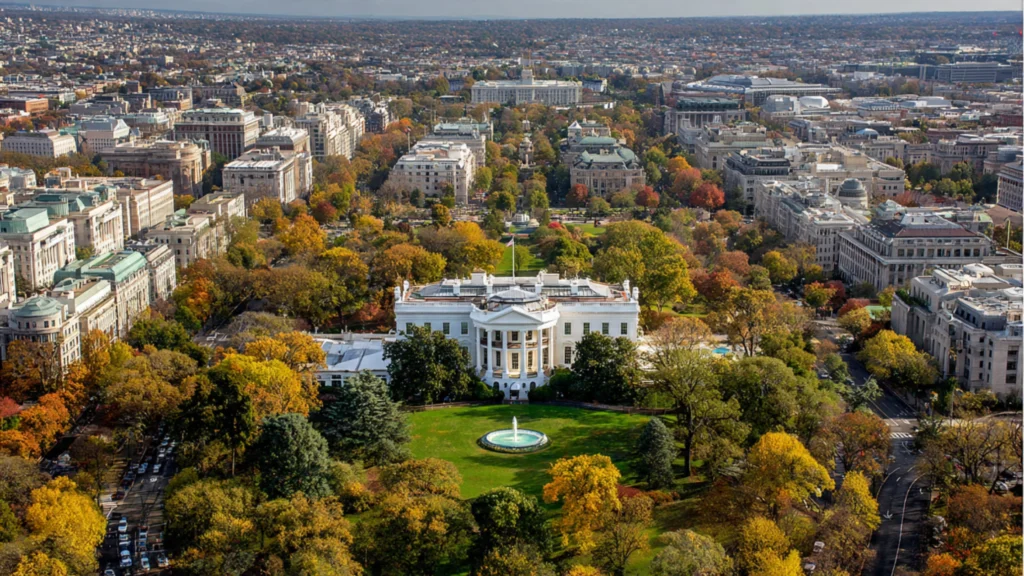
What Is the White House Fellowship, Exactly?
Founded in 1964, the White House Fellows Program is widely considered the nation’s premier non-partisan leadership and public service fellowship. It’s administered by the President’s Commission on White House Fellowships (PCWFH) and run in coordination with the Office of Personnel Management (OPM).
Here’s the short version of what it actually is: you become a full-time, paid federal government employee for one year, working directly alongside cabinet secretaries, senior White House staff, and other top-ranking officials. Not observing. Not taking notes from a corner. Working.
The 2026–27 fellowship year runs from September 2026 through August 2027, based in Washington, D.C.

How Much Does the White House Fellowship Pay?
One of the most Googled questions about this program: Is the White House Fellowship a paid position?
Yes — and meaningfully so. Fellows are classified as full-time federal government employees and receive a federal government salary for the duration of the program year. While the exact figure varies based on placement and experience level, Fellows are compensated at a senior government pay scale, with full federal benefits.
This is not a stipend. This is not a “living allowance.” You are employed by the U.S. government.
Beyond the salary, the White House Fellowship benefits include:
- Direct access to the most powerful decision-makers in the country
- An intensive education program with policy trips (domestic and international)
- Semi-weekly speaker seminars with leaders across sectors
- Community service opportunities
- Membership in one of the most consequential alumni networks in public life
White House Fellowship Eligibility: Can You Apply?
Let’s get this out of the way before you spend 25+ hours on your application.
You are eligible if:
- You are a U.S. citizen
- You have completed your undergraduate education
- You are not a current federal employee (with one exception: active-duty military personnel are eligible)
That’s it. There are no formal age restrictions. The program was designed to reach professionals early in their careers, but “early” is broadly interpreted. Past fellows have included military officers, physicians, lawyers, engineers, entrepreneurs, and educators.
You do not need a specific graduate degree. You do not need to be from a particular city or state. You do not need to have political connections.
What you do need is a demonstrable record of accomplishment — and the ability to make that case on paper.
Who Actually Gets Selected? (White House Fellowship Acceptance Rate)
Here’s the number that should both intimidate and motivate you: the White House Fellowship acceptance rate is roughly 1–2% of applicants in a typical year.
From the thousands who apply:
- Approximately 100 applicants are named Regional Finalists
- About 30 of those advance to become National Finalists
- Ultimately, between 11 and 19 Fellows are selected
In recent years, classes have averaged 14 to 16 people.
That’s extraordinarily competitive — but competitive in the way that meaningful things always are. The people who make it through aren’t necessarily the most credentialed. They’re the ones who can make the case for themselves, who’ve done something significant, and who can articulate exactly why they’re standing in that room.

The White House Fellowship Application: A Step-by-Step Guide
For the 2026–27 cycle, the application process looks like this:
Step 1: Download and Complete Parts 1 and 2
The application consists of three parts. Parts 1 and 2 are submitted directly by the applicant as PDFs to WhiteHouseFellows@who.eop.gov.
The application covers:
- Personal Information
- Resume
- Essays (the most important section — more on this below)
- Declarations and Certification
Step 2: Secure Your Letters of Recommendation
At least three recommenders must submit letters of recommendation on your behalf (Part 3). These are submitted separately by your recommenders.
Strong recommendation letters should come from:
- At least one person who can speak to your professional competence
- At least one person who knows your community and civic involvement
- Your current supervisor, if applicable (a prior supervisor is acceptable but current is preferred)
The program specifically notes that a letter from a prominent name who doesn’t actually know you is not helpful. Pick people who can speak to your character in detail.
Step 3: Submit by the Deadline
All materials must be received by April 22, 2026, at 5:00 PM EDT. No exceptions. No extensions.

The Essays: Where Applications Are Won or Lost
The six essays are, without question, the most critical element of the written application. Program materials are explicit: these essays will be studied closely during the selection process.
Here’s exactly what you’re writing:
| Essay | Word Limit | What It’s Really Asking |
|---|---|---|
| Current Employment | 200 words | Show depth beyond the resume line |
| Most Significant Professional Achievement | 200 words | Prove impact, not just activity |
| Most Significant Community Service Achievement | 200 words | Who are you when no one’s watching? |
| Lifetime Goals | 300 words | What’s your 30-year vision? |
| Memorandum for the President | 500 words | Your single most important essay |
| Motivation for the Fellowship | 300 words | Why you, why now, why this? |
A few things worth underlining:
The Presidential Memorandum is your centerpiece. In regional interviews, it generates more questions than any other essay. Pick a specific, defensible policy position — not a vague aspiration. Be concrete. Be bold. Be prepared to defend every word.
“Most Significant” does not mean biggest. It means most meaningfully yours. A community project in a small town that genuinely changed something is far stronger than a corporate initiative you listed third on a slide.
These are not résumé items. The application already has a résumé section. The essays are your chance to think out loud — to show how you reason, what you value, and why the government should trust you with real work for a year.
Developing a complete, competitive application is estimated to take at least 25 hours. Start now.
The White House Fellowship Selection Process: What Happens Next
Once applications close, here’s the timeline:
Regional Interviews
Former Fellows screen all applications and identify approximately 100 Regional Finalists. These candidates are invited to interview with regional panels held in cities across the country.
Regional interviews involve:
- An evening dinner the night before, where candidates meet panelists and fellow finalists
- A full day of structured 20-minute interviews (typically four per candidate)
- Panelists who have studied your application in detail — especially your essays
The interviews are conducted by distinguished citizens from each regional city. They are not government bureaucrats running through a checklist. They are accomplished people who are genuinely curious about you.
National Finalists: “Selection Weekend”
Approximately 30 Regional Finalists are invited to Washington, D.C. for the final round — called “Selection Weekend.”
This is intense, in the best possible way:
- Three evenings and two days of interviews with members of the President’s Commission
- A minimum of ten formal 20-minute interviews
- Additional meals, activities, and informal settings where Commissioners can evaluate candidates in group situations as well
Commissioners observe you formally and informally. How you engage in a dinner conversation matters as much as how you handle a tough policy question.
Placement Week
Selected Fellows return to D.C. about a month later for “Placement Week,” during which they interview with various Executive Branch offices — Cabinet departments, agencies, and White House offices.
Both Fellows and offices rank their preferences. The program director makes final placement decisions in consultation with White House, department, and agency officials. In a typical year, there are roughly twice as many offices wanting a Fellow as there are Fellows to place.
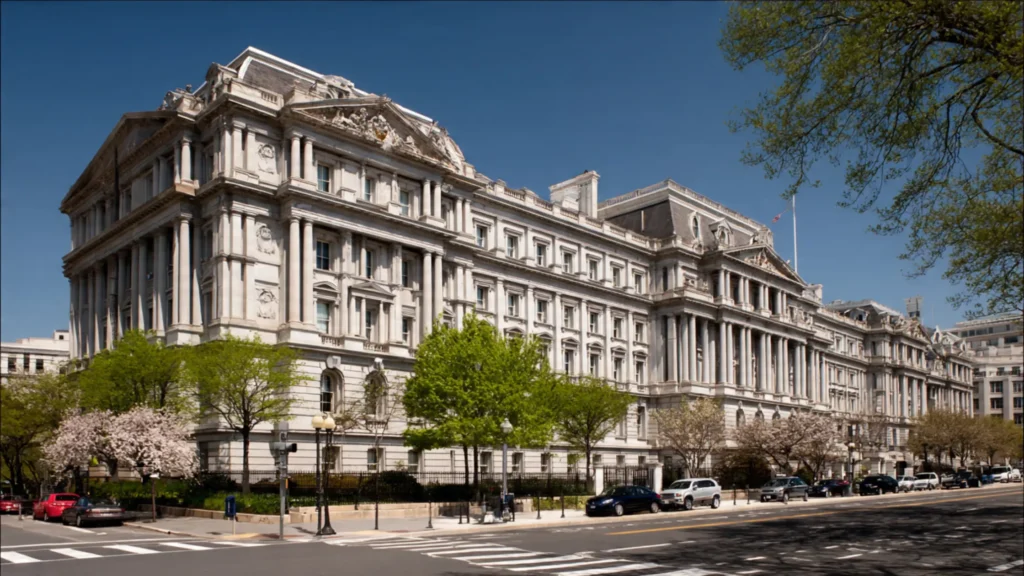
What Does a White House Fellow Actually Do?
Fellows work as full-time employees embedded in their placement office for the duration of the program year. This isn’t a shadow program. It’s not observation. You’re on the team.
Work placements can involve:
- Supporting Cabinet secretaries or senior White House staff on active policy work
- Contributing to program development or strategic operations at the agency level
- Representing the agency or department in various capacities
The education program runs parallel to the work placement and includes:
- Semi-weekly speaker seminars
- Domestic policy trips
- An international policy trip
- Day trips focused on specific policy issues
- Community service projects in Washington, D.C.
Long hours are part of the deal. Travel on behalf of the agency is possible. This is a full-time commitment — and the opportunity matches that commitment.
White House Fellowship Alumni: Where Do Fellows Go?
Of the 894 alumni produced over six decades, the program’s legacy is difficult to overstate.
Current public officials who are White House Fellowship alumni include:
- General Dan Caine, Chairman of the Joint Chiefs of Staff
- Emil Michael, Undersecretary of Defense for Research and Engineering
- Dr. Heidi Overton, Deputy Director of the White House Domestic Policy Council
- Senator Bill Hagerty of Tennessee
- Senator Dan Sullivan of Alaska
Beyond government, alumni have led corporations, universities, military commands, nonprofits, and media organizations. The alumni network is both genuinely powerful and genuinely active.
The credential doesn’t just open doors. It connects you to a community of people who went through the same process — and who tend to operate at the highest levels of whatever field they’re in.
Tips for a Winning White House Fellowship Application
1. Start your essays immediately. Twenty-five hours is the estimate. It will likely take more. Don’t find this out two days before the deadline.
2. Be specific in the Presidential Memo. Vague proposals get vague reactions. Pick one thing. Argue for it. Know the counterarguments.
3. Choose recommenders who know you deeply, not just prominently. A senator who met you twice is less valuable than a direct supervisor who watched you solve a genuine problem.
4. Be diverse in your references. Aim for at least one professional, one community-focused, and one supervisory letter. The program looks for this intentionally.
5. Don’t treat the essays like résumé bullets. The application has a résumé section. The essays are where your voice lives.
6. Know your own story. At regional and national interviews, you will be asked to go deep on your application. If you wrote something to sound impressive rather than because it’s true, it will show.
7. Prepare for the Presidential Memo interview. This essay generates the most follow-up questions. Be ready to defend your policy proposal from multiple angles.
8. Don’t be vague about your goals. The “Lifetime Goals” essay rewards specificity. Where do you want to be? What do you want to have built? Why does it matter?
Is the White House Fellowship Right for You?
It’s worth asking the honest version of this question.
The White House Fellowship is not designed for students — it’s designed for professionals who already have a record. If you’re just beginning your career, the program encourages you to build that record first and apply when you have something to show.
It’s designed for people who are genuinely committed to public service — not as a line item, but as a value. The selection process is specifically designed to surface that commitment, and to surface its absence.
And it’s designed for people who want to operate at the highest levels of government — not to observe, but to contribute. If that’s you, this is one of the few programs in the world that can actually put you there.
How to Apply for the 2026–27 White House Fellowship
Here’s the short version:
- Download Parts 1 and 2 from the official Commission website at whff.org
- Complete all sections including the six essays
- Submit Parts 1 and 2 as PDFs to WhiteHouseFellows@who.eop.gov
- Arrange for at least three recommenders to submit Part 3 letters on your behalf
- Deadline: Wednesday, April 22, 2026, at 5:00 PM EDT
For questions, contact WhiteHouseFellows@who.eop.gov or call the program office at 202-395-4522.
Final Thoughts
The White House Fellowship is the kind of program that changes the shape of a career. Not because it looks good on a CV — though it does — but because a year working inside the executive branch at that level changes how you understand power, policy, and public service.
OPM Director Scott Kupor put it simply: this program represents “the very best of public service in leadership development.”
If you’ve read this far, you’re probably the kind of person who should apply. The deadline is April 22nd. The clock is running.
Have questions about the White House Fellowship application? Drop them in the comments — we’re watching this thread.