• Skip to primary navigation
  • Skip to main content

CHEVENING SCHOLARSHIP

  • SCHOLARSHIPS
  • FELLOWSHIPS
  • Internships
  • GUIDES

FELLOWSHIPS

2026 Postdoctoral Fellowships at UNISA: Your Complete Guide to CAIDS Augmented Intelligence & Cybersecurity Research

April 12, 2026 by Amina Shah

Here’s a thought that might hit a little close to home: you’ve just finished your PhD. Years of research, late nights, and enough coffee to float a small vessel. And now you’re staring at the classic post-PhD question — what’s next?

If your work touches AI, cybersecurity, data science, or anything in the human-technology space, I’ve got genuinely good news for you. The University of South Africa (UNISA) just opened applications for its 2026 Postdoctoral Fellowships through the Centre for Augmented Intelligence and Data Science (CAIDS) — and the deadline is April 13, 2026. That’s tight. So let’s get straight into it.

What Is UNISA, and Why Should You Care?

Before we talk fellowships, let’s set the scene.

UNISA — the University of South Africa — is not your average university. It’s one of the largest distance-learning institutions on the African continent, with a research footprint that punches well above its weight globally. As Africa’s only publicly funded, comprehensive open distance learning institution, UNISA has a mandate that’s both wide and ambitious: quality education and research that reaches people everywhere.

Through CAIDS (the Centre for Augmented Intelligence and Data Science), UNISA is putting serious institutional weight behind one of the most exciting and fast-moving research frontiers of our time: augmented intelligence and AI-driven cybersecurity.

This isn’t a theoretical exercise. This is where the future of human-AI collaboration, security systems, and decision-making is actually being built.

The Fellowship Focus: What Is Augmented Intelligence, Exactly?

You’ve probably heard a lot about Artificial Intelligence replacing humans. CAIDS is doing something more nuanced — and arguably more interesting.

Augmented intelligence isn’t about machines taking over. It’s about machines and humans working together, each doing what they do best. Think of it as AI that amplifies human judgment rather than substituting it. In cybersecurity contexts, this means building intelligent systems that help analysts make faster, smarter decisions when threats emerge — not systems that lock humans out of the loop.

It’s a subtle but profound distinction. And it opens up a genuinely rich research space.

Key Research Areas for the 2026 Fellowship

If your PhD work overlaps with any of the following, you’re in the right place:

Research AreaWhat It Involves
Augmented Intelligence / Human-AI CollaborationDesigning systems where AI enhances rather than replaces human expertise
Cybersecurity & AI-enabled Cyber DefenceUsing intelligent systems to detect, respond to, and prevent threats
Data Science, Machine Learning & NLPAdvanced analytical approaches to complex datasets
Large Language Models (LLMs)Research on how LLMs function in security and decision-support contexts
Explainable & Trustworthy AIMaking AI systems transparent, interpretable, and accountable
Human-centred AI DesignBuilding AI with human needs, biases, and workflows at the center
AI for Threat Detection & Decision SupportApplied AI tools for operational security and resilience

Honestly, this list reads like a who’s-who of the most in-demand research areas globally right now. If you’ve been working in any of these lanes, this fellowship was essentially written with you in mind.

Why Join CAIDS? The Real Benefits

Let me be straightforward here — a fellowship is only as good as what it actually gives you. So what does the CAIDS postdoc actually offer?

Financial support: The fellowship comes with a stipend of R300,000 (approximately). For researchers based in South Africa — or willing to engage with a South African institution — this is a meaningful package that allows you to focus on research without scrambling for income.

Beyond the stipend, you get:

  • Access to leading experts in AI and cybersecurity for collaboration and mentorship
  • Engagement in strategic, high-impact research that has real-world applications
  • Exposure to interdisciplinary approaches that bridge technology, human behaviour, and security
  • Opportunities to strengthen your academic publication record — which, let’s be honest, is the currency of an early-career researcher’s career
  • The credibility of being associated with one of Africa’s most recognized universities

The programme is specifically designed to build research capacity — meaning they’re invested in your growth, not just your output.

Who Can Apply? Eligibility Requirements

Here’s the part you need to read carefully.

The CAIDS postdoctoral fellowship is designed for highly motivated, innovative researchers who are:

  • ✅ Recent PhD holders — you need a completed doctorate to be eligible for postdoctoral positions
  • ✅ Working in or adjacent to the key research areas listed above (AI, cybersecurity, data science, NLP, LLMs, explainable AI, human-AI systems)
  • ✅ Able to demonstrate a strong research profile — publications matter here; peer-reviewed outputs are your calling card
  • ✅ Excited about interdisciplinary, applied research — CAIDS isn’t purely theoretical, so enthusiasm for real-world impact is key

A note on publication records: UNISA explicitly values accredited research outputs. If you’re still building your publication profile, now is a good time to honestly assess whether you’re at a competitive stage — or whether this is a goal to work toward for the next cycle.

How to Apply — Step by Step

This is simple, but pay attention to the details because missing any of them would be a shame.

Application deadline: April 13, 2026 at 12:00 noon, South Africa time (SAST)

How to submit: Via email directly to:

Prof. Hossana Twinomurinzi 📧 twinoh@unisa.ac.za

Make sure you review the full official advertisement for the complete list of required documents. Typically for postdoctoral applications at this level, you’d expect to include:

  • Your CV/academic resume with full publication list
  • A research proposal or statement of research interest aligned with CAIDS priorities
  • Certified copies of your PhD certificate
  • Contact details for academic referees

Double-check the official call for any additional requirements before you hit send.

FAQs — The Questions You’re Already Googling

Q: Is this fellowship open to international applicants? The advertisement doesn’t explicitly restrict to South African citizens, and UNISA’s global mandate as a distance-learning institution suggests openness to international researchers. That said, you should confirm directly with Prof. Twinomurinzi whether visa, residency, or in-country requirements apply.

Q: How does this compare to an NRF Postdoctoral Fellowship? The NRF (National Research Foundation) fellowship is a nationally competitive programme with different funding structures and institutional attachments. CAIDS/UNISA postdocs are institution-specific, which means you’re embedded directly within UNISA’s research ecosystem. Both are prestigious; the CAIDS fellowship is particularly focused on AI and cybersecurity, so it’s more specialized.

FeatureUNISA CAIDS PostdocNRF Postdoc
FocusAI, Cybersecurity, Augmented IntelligenceBroad scientific research
Stipend~R300,000Varies by discipline
Application BodyCAIDS, UNISANational Research Foundation
SpecializationNarrow and deepWide range of disciplines
Research EnvironmentUNISA + CAIDS ecosystemHost institution of choice

Q: Do I need to be based in South Africa? UNISA is a distance-learning institution, which creates some flexibility — but postdoctoral research typically requires meaningful institutional engagement. Reach out to the contact listed to clarify expectations around physical presence.

Q: What if my PhD is in a closely related field but not exactly AI or cybersecurity? The key phrase in the fellowship description is “highly motivated and innovative researchers.” If your background overlaps meaningfully — say, you have a PhD in cognitive science, information systems, or even philosophy of technology — and you can make a strong case for your relevance to augmented intelligence, it may still be worth applying and letting the selection committee decide.

Q: What happens after the fellowship? A CAIDS postdoc strengthens your publication record, gives you collaborative networks, and positions you for academic or industry roles in AI research. It’s a launchpad, not a landing pad.

The Bigger Picture: Why AI Cybersecurity Research Matters Right Now

Let me zoom out for a moment, because context matters.

We’re living through a genuinely unprecedented moment in AI development. LLMs, autonomous systems, and AI-enabled decision tools are being deployed at scale across industries — including security-critical ones. And the gap between how fast these systems are being adopted and how well we understand their risks, limitations, and ethical implications? That gap is enormous.

Researchers working on explainable AI, trustworthy AI, and AI-enabled cyber defence aren’t just doing interesting academic work. They’re building the foundations that determine whether these systems are safe, fair, and actually useful when it matters most.

That’s the kind of work CAIDS is funding. And it’s the kind of work the world genuinely needs more of.

A Quick Reality Check on the Deadline

April 13, 2026. Noon, South Africa time.

If you’re reading this in April 2026, you have very little runway. That’s not a sales pitch — it’s just true. Postdoctoral applications take time to put together well: a strong research proposal, a polished CV, solid referee contacts, and the right documentation.

So here’s what I’d suggest:

  1. Today: Email Prof. Twinomurinzi to express interest and confirm required documents
  2. Within 48 hours: Start drafting your research proposal — keep it focused on one or two of the key CAIDS research areas
  3. Contact your referees now — give them as much notice as possible
  4. Review your publication list — make sure it’s accurate and current
  5. Submit at least a day early — don’t bet your application on a last-minute email at 11:58 a.m.

The Bottom Line

The 2026 UNISA Postdoctoral Fellowship in Augmented Intelligence and Cybersecurity is a genuine, well-resourced opportunity for early-career researchers at the intersection of AI, data science, and security. It’s hosted by a respected institution with a strong research mandate, focused on work that matters globally, and it comes with financial support and professional development built in.

If your research lives anywhere in the AI-cybersecurity-human systems space, this is worth your serious attention.

The deadline is April 13, 2026 at noon SAST. That’s soon. But soon enough, if you start now.

Apply via email to: 📧 Prof. Hossana Twinomurinzi — twinoh@unisa.ac.za 📅

Deadline: April 13, 2026 | 12:00 noon South Africa time

OFFICIAL WEBSITE

Know a researcher who should see this? Share it with them. The best fellowships go to the best-prepared candidates — and sometimes that just means being the one who found out in time.
Filed Under: FELLOWSHIPS

UNESCO MGIEP Youth Fellowship 2026: The Fully-Funded India-to-Korea Opportunity You Can’t Miss

April 12, 2026 by Amina Shah

Imagine spending ten days in South Korea, at a university campus, surrounded by some of the most driven young minds from across India — discussing peacebuilding, sustainable development, and how you can actually make a dent in the world’s most complex problems. No hotel bills. No flight stress. No visa headaches. All of it covered.

That’s not a travel fantasy. That’s the UNESCO MGIEP Youth Fellowship on Leadership for Peace and Sustainability 2026. And if you’re an Indian citizen under 30 reading this right now, you might just be the exact person it was built for.

The application deadline is April 25, 2026 at 11:59 PM IST. So let’s not waste a single sentence.

What Is UNESCO MGIEP — and Why Does This Fellowship Matter?

First, a quick orientation.

UNESCO MGIEP stands for the Mahatma Gandhi Institute of Education for Peace and Sustainable Development. It’s a specialized institute of UNESCO — yes, that UNESCO — headquartered in New Delhi, India. Its entire mandate is to use education as a vehicle for building peace and achieving the Sustainable Development Goals (SDGs).

The Youth Fellowship is MGIEP’s flagship program for emerging Indian leaders. It’s not a seminar. It’s not a webinar series. It’s a fully immersive, in-person experience designed to genuinely shift how young people think about leadership, conflict, and their role in the world.

And it takes place in South Korea — at the Humanitas College of Kyung Hee University, one of Asia’s most respected institutions in the peace and humanities space.

That combination — UNESCO credibility, South Korean academic environment, Indian youth cohort, zero cost to you — is genuinely rare.

Fellowship at a Glance

Before we get into the details, here’s your quick-reference summary:

DetailInformation
Fellowship DatesJune 25 – July 4, 2026
LocationHumanitas College, Kyung Hee University, South Korea
Duration10 days (fully in-person)
Application DeadlineApril 25, 2026 at 11:59 PM IST
FundingFully funded (travel, visa, accommodation, meals)
EligibilityIndian citizens under 30, undergraduate degree completed
ModeIn-person attendance mandatory
ContactDiksha Poddar — d.poddar@unesco.org

What Does “Fully Funded” Actually Mean Here?

I know “fully funded” gets thrown around a lot in the fellowship world, sometimes meaning almost funded or partially funded depending on how you squint at the fine print.

So let me be specific. UNESCO MGIEP covers:

  • ✅ International travel costs — your flights to and from South Korea
  • ✅ Visa expenses — the process and fees, sorted
  • ✅ Accommodation — where you stay during the program
  • ✅ Meals — food throughout the fellowship period

That’s the full package. You show up. You learn. You connect. You come back changed. The financial barrier is removed entirely — which is, frankly, the point. UNESCO MGIEP wants the best and most committed young minds from India, regardless of economic background.

What Will You Actually Do There?

Ten days in South Korea sounds great. But what does the program actually look like?

The fellowship is built around experiential, action-oriented learning — not passive lectures. Think of it as part leadership boot camp, part global dialogue, part personal transformation. Here’s what the curriculum centers on:

Core learning areas:

  • Peacebuilding and conflict transformation
  • Digital technology and social innovation
  • The Sustainable Development Goals (SDGs)
  • Leadership and critical thinking
  • Global citizenship and ethical decision-making

How you’ll learn it:

  • Interactive workshops using real-world case studies from the Asia-Pacific region
  • Group discussions and collaborative problem-solving
  • Reflective learning sessions — the kind that actually make you think
  • Field visits and experiential activities (the details of which are revealed to fellows)

The program uses proven case studies from across the Asia-Pacific to ground abstract concepts in lived reality. You’re not just learning about peacebuilding — you’re practicing the skills that peace-builders actually use.

The Three Objectives (And Why They’re Bigger Than They Sound)

UNESCO MGIEP has articulated three clear goals for this fellowship. They’re worth reading carefully, because they reveal what kind of person this program is really looking for:

1. Nurture skills for peace and sustainability The program equips fellows with the ability to apply the norms, practice, and values of peace and sustainable development to real, emerging issues — both in India and globally.

2. Cultivate future leaders through immersive learning This isn’t a certificate to add to your CV (though it is that too). It’s designed to genuinely shift how you lead, how you think, and how you engage with complexity.

3. Build a vibrant network of UNESCO MGIEP young leaders The cohort you’ll be part of is a network that outlasts the ten days. Fellows go on to work in government, civil society, academia, international organizations — and they carry these connections forward.

Who Can Apply? The Eligibility Checklist

The fellowship is specifically for young people in India. Here’s the precise eligibility criteria:

  • ✅ Under 30 years of age on June 25, 2026 (the fellowship start date)
  • ✅ Indian citizen, currently residing in India
  • ✅ Undergraduate degree completed before the fellowship begins
  • ✅ Proficiency in English — compulsory, as all sessions are conducted in English
  • ✅ Available to attend in person in South Korea for the full duration

Who is especially encouraged to apply:

  • Youth from all genders
  • Applicants from diverse socio-economic and cultural backgrounds
  • People with disabilities

UNESCO MGIEP isn’t just saying this for optics. The institute’s core philosophy is rooted in equity and inclusion, and the fellowship selection process genuinely reflects that. If you’ve been holding back because you don’t fit the typical “prestigious fellowship applicant” mold, this is the program that might surprise you.

How Are Applications Evaluated?

This is the part most applicants underestimate — and it’s worth thinking about carefully.

Applications are reviewed for coherence of thought and your ability to envision the bridge between:

  • Your past experiences
  • The learnings from this fellowship
  • How both will shape your career trajectory

In other words: they want to see that you’ve actually thought about why this fellowship, why now, and where you’re going with it.

This isn’t a scholarship for the highest GPA or the most impressive internship. It’s for someone who can think clearly, reflect honestly, and connect their personal story to something bigger.

FAQs — Answered Honestly

Q: Can I apply if I just finished my undergraduate degree this year? Yes — as long as you’ve completed your degree before June 25, 2026 (the fellowship start date), you qualify. Even if you just graduated, you’re eligible.

Q: What if I’m not from a metro city or elite institution? This is explicitly encouraged. MGIEP’s inclusivity commitment is real. Where you’re from matters less than how you think and what you’re working toward.

Q: What English level is required? Proficiency is compulsory, but they don’t specify a test score. Your application itself — how you write, how clearly you express ideas — serves as the demonstration of your English ability.

Q: Can I apply via email? No. And this is important: applications sent via email will not be accepted. You must use the official online form. Only submissions through the UNESCO MGIEP Google Form are valid.

Q: Who do I contact for questions? Reach out to Diksha Poddar, Associate Project Officer at UNESCO MGIEP: 📧 d.poddar@unesco.org

How to Write a Strong Application

Since the selection process is built around coherence of thought, here’s how to approach your application:

Tell a real story. Don’t describe an idealized version of yourself. Share an experience that genuinely shaped your thinking on peace, sustainability, or social change — even if it’s quiet or local.

Connect the dots explicitly. Don’t assume reviewers will make the connections for you. If your background is in engineering but you care about climate resilience, explain exactly how one leads to the other.

Be specific about impact. “I want to make a difference” is every application ever. “I want to bring conflict resolution frameworks back to my work with rural youth in [district]” is a fellowship application.

Know the SDGs. You don’t need to memorize all 17, but you should understand which ones resonate with your work and be able to articulate why.

Review your response for clarity. Read it out loud. If a sentence confuses you when you hear it, rewrite it.

How Does This Compare to Other Youth Fellowships?

Fair question. Here’s a quick comparison of the MGIEP fellowship against similar programs:

FeatureUNESCO MGIEP 2026Generic Youth Fellowship
Fully funded (incl. flights)✅ YesOften partial
International location✅ South KoreaVaries
UNESCO institutional backing✅ YesRarely
India-specific✅ YesOften global
Focus on peace & SDGs✅ Core themeVaries
In-person immersive format✅ MandatoryOften hybrid
Application via email❌ Not acceptedOften allowed

The Bigger Picture: Why This Actually Matters

I want to be straight with you about something.

There are a lot of fellowships out there. Some are genuinely transformative. Some are mostly credential-collecting exercises dressed up in impressive language. This one leans toward the former — and here’s why I think that.

The UNESCO MGIEP Youth Fellowship exists because its founders believe, in a very serious way, that the next generation of peacebuilders needs to be trained. Not just inspired. Trained. With real case studies, real frameworks, real skills.

And the location — South Korea, specifically the Humanitas College at Kyung Hee University — isn’t random. South Korea’s own modern history is deeply entangled with questions of conflict, division, resilience, and development. Being in that environment while learning about peacebuilding adds a layer of context you simply cannot get from a Zoom call.

If you care about building something — a career, a community, a movement — that makes India and the world actually better, this program is worth taking seriously.

The Bottom Line

The UNESCO MGIEP Youth Fellowship on Leadership for Peace and Sustainability 2026 is a ten-day, fully funded, in-person program in South Korea for Indian youth under 30. It covers everything — flights, visa, accommodation, meals. It’s backed by UNESCO. It selects people based on how thoughtfully they connect their past to their future.

And the deadline is April 25, 2026 at 11:59 PM IST.

That’s very soon. But it’s enough time, if you start now.

Apply here: Official UNESCO MGIEP Application Form

Questions? Email Diksha Poddar at d.poddar@unesco.org

More info: Visit the official UNESCO MGIEP Youth Fellowship page

Know a young leader who belongs in this program? Share this with them. The April 25 deadline waits for no one — but the right person shouldn’t miss it just because they found out too late.

Filed Under: FELLOWSHIPS

James Buchanan Fellowship 2026–2027: Your Complete Guide to This Prestigious Fully Funded USA Fellowship

April 11, 2026 by Amina Shah

Here’s a question worth sitting with: what if there was a fellowship that didn’t just fund your research, but fundamentally changed how you think about the questions that matter most in economics, politics, and society?

That’s not a hypothetical. That’s the James Buchanan Fellowship 2026–2027, offered by the Mercatus Center at George Mason University — and applications close on April 15, 2026.

If you’ve recently finished your PhD and you work anywhere near political economy, institutional analysis, public choice, law and economics, or the social sciences broadly, this fellowship was essentially designed for your career stage. Let me walk you through everything.

Who Was James Buchanan — and Why Does His Name on This Fellowship Matter?

Before we get into the mechanics, a little context goes a long way.

James M. Buchanan was a Nobel Prize-winning economist — winner of the 1986 Nobel Memorial Prize in Economic Sciences — best known for developing public choice theory: the application of economic reasoning to political decision-making. His insight was both simple and radical: politicians and bureaucrats respond to incentives just like everyone else. Self-interest doesn’t disappear when you enter public office.

Buchanan’s work on constitutional political economy — the rules that govern collective action and governance structures — reshaped how economists, political scientists, and legal scholars think about institutions, democracy, and economic coordination.

Naming this fellowship after him is not just an honor. It’s a signal about what the program values: rigorous, foundational thinking about how societies actually organize themselves.

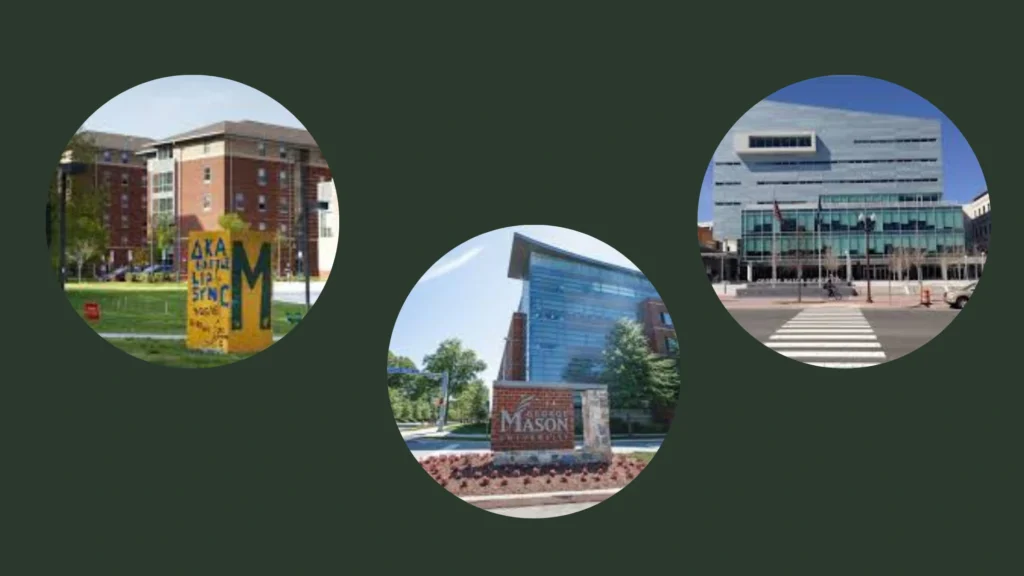
Mercatus Center at George Mason University Fairfax Virginia campus here

The Fellowship at a Glance

DetailInformation
Host InstitutionMercatus Center, George Mason University
LocationFairfax, Virginia, USA (+ virtual sessions)
DurationOne academic year (2026–2027)
Total AwardUp to $8,000
Application DeadlineApril 15, 2026
Decisions AnnouncedApproximately 10–12 weeks after deadline
EligibilityPhD completed within last 6 years; academic/research position
Open to InternationalsYes — open globally
ContactBuchananFellowship@mercatus.gmu.edu

What Does the Fellowship Actually Cover?

Let’s talk money first, because it matters.

The total award of up to $8,000 is structured to make full participation possible, regardless of where you’re coming from. Here’s what it includes:

  • ✅ A financial stipend for research and academic activities
  • ✅ All required reading materials — you don’t pay for a single book
  • ✅ Travel expenses to attend in-person colloquia at George Mason University
  • ✅ Lodging during the residential weekends in Fairfax, VA
  • ✅ Meals throughout fellowship events and sessions

Beyond the $8,000 package, fellows become eligible for additional conference and research funding through Mercatus initiatives — meaning the financial support doesn’t necessarily end when the base award does.

The Intellectual Focus: Austrian, Virginia, and Bloomington Schools

The Buchanan Fellowship is organized around three interconnected traditions in political economy. If these are new to you, here’s the short version:

The Austrian School Rooted in thinkers like F.A. Hayek and Ludwig von Mises, the Austrian tradition emphasizes spontaneous order, the price system as an information mechanism, and deep skepticism of central planning. It’s about understanding how markets coordinate dispersed knowledge that no single person or institution could possess.

The Virginia School This is Buchanan’s home turf. Virginia School political economy applies economic logic to political behavior — examining how incentive structures shape government decisions, why public policy often fails despite good intentions, and how constitutional rules constrain or enable collective action.

The Bloomington School Associated with Nobel laureate Elinor Ostrom, the Bloomington tradition studies how communities self-govern shared resources — challenging the assumption that only markets or governments can solve collective action problems. It’s polycentric, empirically rich, and deeply important for anyone thinking about governance and institutions.

The fellowship asks scholars to engage seriously with all three — and to think about how these traditions illuminate contemporary questions in the social sciences.

Program Structure: What the Year Actually Looks Like

The Buchanan Fellowship is a thoughtful blend of in-person immersion and virtual engagement. Here’s the breakdown:

In-Person Colloquia (Fairfax, VA) Fellows spend two weekends in residence at George Mason University. Each colloquium is built around curated readings and includes:

  • Seminar-style discussions led by Hayek Program scholars, affiliated faculty, and Buchanan Fellowship alumni
  • Formal faculty lectures
  • Collaborative dialogue sessions
  • Formal meals and hospitality — which, notably, are considered integral to the experience, not just a pleasant extra

Attendance at all scheduled sessions, including meals, is expected. The program isn’t just about absorbing ideas — it’s about building real intellectual relationships.

Virtual Sessions Three additional online sessions complement the residential experience, allowing sustained engagement with the program’s intellectual community throughout the academic year.

The Network You Join Fellows enter an international network of Mercatus students, scholars, alumni, and research affiliates who are actively engaged in cutting-edge political economy research. This isn’t a one-year transaction. Fellows describe long-term connections — mentorships, co-authorships, and professional relationships — that outlast the program itself.

Fields of Study This Fellowship Covers

One of the most underappreciated things about the Buchanan Fellowship is how genuinely interdisciplinary it is. You don’t have to be an economics PhD. The fellowship is open to scholars whose work engages meaningfully with political economy from any disciplinary angle.

Fields that fit well include:

  • Political Economy
  • Economics (all subfields)
  • Public Choice Theory
  • Public Policy
  • Political Science
  • Law and Economics
  • Economic History
  • Philosophy (especially political philosophy)
  • Sociology and institutional analysis
  • Anthropology with institutional focus

If your research touches on governance, incentives, institutions, coordination, or collective action — from any disciplinary starting point — you belong in this conversation.

Eligibility Requirements — The Precise Checklist

This is the part that trips people up, so read carefully.

To qualify for the James Buchanan Fellowship 2026–2027, you must:

  • ✅ Have completed your doctoral degree within the last six years (so PhD awarded no earlier than approximately 2020)
  • ✅ Hold an academic position at an accredited university and/or a research position at an organization dedicated to in-depth research in the social sciences or related fields
  • ✅ Be able to commit to traveling for the in-person colloquia during the 2026–2027 academic year
  • ✅ Be prepared to actively participate in all scheduled programming — including meals and social events

A few important clarifications:

Scholars on the academic job market are eligible, provided they meet the doctoral completion requirement. So if you’re in that stressful liminal space between finishing your PhD and landing a position, you can still apply.

The fellowship is open to international applicants. You don’t need to be a US citizen or resident. The program draws scholars globally.

You don’t need to be an economics major or have an economics PhD. The fellowship’s interdisciplinary spirit is genuine, not marketing copy.

What to Submit: Application Requirements

Here’s exactly what you need to prepare:

1. Cover Letter (1–2 pages) This is the heart of your application. It should cover:

  • Your graduate school career to date
  • Your current research interests and projects
  • Your academic career goals
  • Your familiarity with thinkers from the Austrian, Virginia, and Bloomington schools
  • What you specifically hope to gain from the program

This last point matters more than most applicants realize. Generic enthusiasm isn’t enough. Show that you’ve thought carefully about what this particular intellectual community offers your specific research.

2. CV/Resume Current, complete, and formatted for an academic audience.

3. Academic Publications (if any) Not a hard requirement to have them, but submit what you have. Quality over quantity.

4. Short Answer Questions The application form includes several short questions. Answer them directly and honestly.

FAQs — Answered Clearly

Q: What makes a strong Buchanan Fellowship application? The clearest differentiator between strong and weak applications is specificity. Reviewers can tell when someone has genuinely engaged with Buchanan, Hayek, Ostrom, and related thinkers — and when someone has done a quick Wikipedia pass. Demonstrate real familiarity. Connect it to your actual research. Explain specifically why this program, not just “a fellowship in political economy.”

Q: I’m in a discipline outside economics. Should I still apply? Yes — if your work engages with questions of institutions, governance, coordination, or political economy broadly defined. The fellowship has welcomed legal scholars, political scientists, philosophers, and sociologists. What matters is intellectual engagement, not departmental affiliation.

Q: Is the $8,000 the only financial benefit? No. Fellows also become eligible for additional Mercatus conference and research funding, and gain access to a network that often generates longer-term collaborative opportunities.

Q: When will decisions be announced? Review begins after April 15. Decisions are typically announced approximately 10–12 weeks after the deadline — so expect to hear back around late June or July 2026.

Q: How does this compare to the Don Lavoie Fellowship?

FeatureJames Buchanan FellowshipDon Lavoie Fellowship
StagePost-PhD (within 6 years)Undergraduate/early grad
AwardUp to $8,000Up to $1,250
FormatHybrid (in-person + virtual)Fully online
DurationOne academic yearOne semester
FocusAdvanced political economyIntroduction to political economy
ResidencyYes (Fairfax, VA)No

They serve different career stages. The Buchanan Fellowship is for scholars already in the field; the Lavoie is for those exploring whether to enter it.

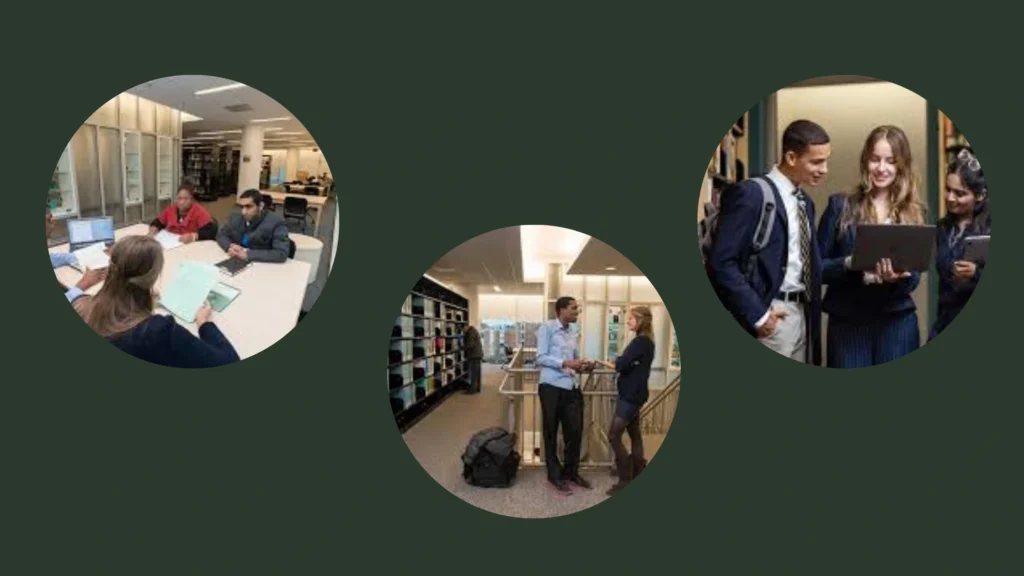
George Mason University campus academic library setting here

Why This Fellowship Is Worth Your Serious Attention

I want to be honest with you about something.

There are a lot of fellowships that promise intellectual community and deliver a few awkward Zoom calls. The Buchanan Fellowship isn’t that.

The Mercatus Center has spent decades building a genuine intellectual community around mainline political economy. The scholars who lead Buchanan colloquia are working researchers — people whose ideas are actively shaping debates in economics, political science, and public policy. When you sit at a formal dinner in Fairfax, Virginia, with Hayek Program scholars and Buchanan alumni, you’re not just networking. You’re entering a conversation that has been running for decades and will continue running after you leave.

For early-career scholars trying to figure out where they fit in the intellectual landscape, and who are drawn to questions about institutions, governance, and how societies actually coordinate — this is one of the few programs that takes those questions as seriously as you do.

How to Apply: Step by Step

  1. Visit the official Mercatus Center fellowship page and review the full application requirements
  2. Confirm your eligibility — PhD within 6 years, current academic or research position
  3. Prepare your cover letter first — it’s the most important document and takes the most time
  4. Assemble your CV and any publications
  5. Complete the online application form and answer all short questions
  6. Submit before April 15, 2026 — no late submissions

Questions? Email the fellowship team directly at BuchananFellowship@mercatus.gmu.edu.

The Bottom Line

The James Buchanan Fellowship 2026–2027 is a fully funded, intellectually serious, one-year program for early-career scholars who want to engage deeply with Austrian, Virginia, and Bloomington school political economy. The $8,000 award covers your stipend, readings, travel, and lodging. The in-person colloquia at George Mason University place you in genuine dialogue with leading scholars. And the network you join is one that supports careers, not just CVs.

The deadline is April 15, 2026. That’s close.

If your work touches on institutions, governance, coordination, or political economy — in any discipline — this is worth your best application effort.

  • Apply via: The official Mercatus Center website
  • Deadline: April 15, 2026
  • Questions: BuchananFellowship@mercatus.gmu.edu

Know a scholar who should be applying for this? Forward this to them today. April 15 comes fast — and the right fellowship at the right career moment genuinely changes trajectories.

Filed Under: FELLOWSHIPS

Everything You Need to Know About the 2026–27 Curatorial Fellowship (OAG × NGC × OBAK)

April 11, 2026 by Amina Shah

So picture this. You’re an emerging Black curator in Canada, passionate about art, community, and reshaping how we tell stories through exhibitions. And then you stumble across a fellowship that’s literally designed for you — paid, mentored, hands-on, and rooted in some of the most respected art institutions in the country.

That’s exactly what the Curatorial Fellowship Program by OAG, NGC, and OBAK is. And right now, applications for the 2026–27 edition are open — but only until April 28, 2026. So let’s get into everything you need to know, fast.

What Even Is This Fellowship?

Let me break it down simply.

Three major Ottawa-based arts organizations have teamed up to create something genuinely meaningful:

  • OAG — Ottawa Art Gallery
  • NGC — National Gallery of Canada (founded 1880, home to 90,000+ works)
  • OBAK — Ottawa Black Art Kollective

Together, they launched the Curatorial Fellowship Program back in 2021 as a collaboration between OAG and OBAK. Last year, the NGC joined in — and now this thing has serious national and international weight behind it.

The fellowship is a one-year, part-time, paid contract for an emerging curator who identifies as Black or of African descent and is based in (or willing to relocate to) the National Capital Region. It’s split into two phases, spans two institutions, and comes with mentorship, networking, and real, exhibition-building experience.

Honestly? It’s the kind of opportunity that changes careers.

Insert image of Ottawa Art Gallery exterior and NGC building here

The Two Phases — Here’s How It Works

One of the coolest things about this fellowship is how structured it is. You’re not just shadowing someone or sitting in on meetings. You’re doing the work.

Phase 1: Ottawa Art Gallery (May 11 – August 31, 2026)

This is where you roll up your sleeves. During Phase 1, you’ll:

  • Develop and launch your own exhibition in OAG’s Annexe Gallery — with artists of your choosing
  • Conduct studio visits, do your research, write about the work
  • Collaborate with OAG staff across curatorial, installation, communications, and learning departments
  • Organize an opening reception
  • Build public communication skills through tours, speeches, and potentially media interviews

You get an assigned OAG curatorial lead to guide and supervise you throughout. Think of them as your mentor-in-chief for this phase.

Phase 2: National Gallery of Canada (September 1, 2026 – February 28, 2027)

Phase 2 is where things go deeper and broader. At the NGC, you’ll:

  • Dive into collection research
  • Write a 1,500-word curatorial essay about your OAG exhibition (with potential for online publication — yes, published)
  • Co-develop a public-facing program with the Learning and Community Engagement department
  • Work across NGC departments including Anti-Racism, Equity, Diversity & Inclusion, Indigenous Ways and Decolonization, and more
  • Participate in local institutional visits and mentorship sessions
  • Close out with a reflective debriefing to share your experience and help shape future editions of the program

The Money Stuff — What’s the Stipend?

Let’s talk numbers, because this matters.

The fellowship comes with a $16,000 total stipend, paid in two installments of $8,000 per phase. This covers 48 weeks of part-time work. You and your curatorial lead will work out how to distribute hours in a way that fits both the project needs and your personal capacity.

It’s not a full-time salary. But it’s a paid opportunity with real professional development value — and that’s not nothing, especially in a field where unpaid internships are still frustratingly common.

Full Benefits Breakdown

Here’s everything that comes with the fellowship:

BenefitDetails
Stipend$16,000 total ($8,000 per phase)
Duration48 weeks (part-time)
Mentorship1–2 outside professionals per phase
Exhibition DevelopmentReal show at OAG’s Annexe Gallery
Collection ResearchAccess to NGC’s 90,000+ works
Curatorial Essay1,500-word essay, potential online publication
NGC MembershipComplimentary 1-year membership + reciprocal museum access
NetworkingCurators, museum professionals, cross-institutional connections
Institutional VisitsLocal Ottawa arts scene exposure

Are You Eligible? Here’s the Checklist

Before you spend time on your application, let’s make sure you qualify. The fellowship is designed for someone who:

  • ✅ Identifies as Black or of African descent in Canada, with lived experience shaped by that identity
  • ✅ Has demonstrated participation in Black/African descent communities — arts programming, cultural initiatives, that kind of thing
  • ✅ Lives in (or can move to) the National Capital Region for the duration of the fellowship
  • ✅ Shows a demonstrated interest in curatorial practice, art history, museum studies, visual culture, or related fields
  • ✅ Is an emerging professional with some experience in exhibition development, research, writing, community engagement, or arts administration

Notice that last point. Some experience. Not ten years. Not a PhD. This fellowship genuinely welcomes people at the earlier stages of their careers.

Skills They’re Looking For

You don’t need to tick every box here, but these are the competencies that will make your application shine:

  • Post-secondary degree or diploma and/or relevant professional experience (art-adjacent fields are great, but other fields are welcome too with demonstrated arts interest)
  • Strong time management and organizational skills
  • Project management or event planning experience
  • Computer proficiency — Word, Excel, PowerPoint
  • Bilingual in English and French is an asset (not required)
  • Strong written and verbal communication skills

Insert image of curatorial exhibition setup / gallery installation here

How to Apply — The Step-by-Step

The application is refreshingly straightforward. Here’s exactly what you need to submit:

  1. Cover Letter / Letter of Intent (max 1 page) — Talk about why you want this fellowship and what your curatorial aspirations look like
  2. Short Exhibition Proposal (max 1 page) — Outline a theme for the exhibition you’d develop in Phase 1
  3. CV/Resume — Highlight relevant experience
  4. Two References — Contact information only (no letters needed at this stage)

Send everything to jobs@oaggao.ca, attention Rebecca Basciano, OAG Chief Curator.

📌 Deadline: April 28, 2026 at 11:59 p.m. EDT

Make sure you reference the specific position in your subject line. And if you need any accommodations for the application or interview process, just mention it in your email — they’re actively committed to accessibility.

FAQs — The Questions You’re Probably Asking Right Now

Q: Do I need to already be in Ottawa to apply? You’ll need to reside in the National Capital Region during the fellowship — but the application doesn’t specify you need to be there at the time of applying. If you’re planning a move, it might be worth noting your intention in your cover letter.

Q: What if I don’t have a formal degree in art or curating? You’re still eligible. The program explicitly says candidates from other fields will be considered if they show demonstrated interest in the arts. Your experience, community involvement, and passion matter here.

Q: What does the selection committee look like? A committee of representatives from OAG, NGC, and OBAK reviews all submissions. That’s meaningful — OBAK’s presence ensures community accountability in who gets selected.

Q: Are there similar fellowships for Black curators in Canada? This is one of the most structured and well-resourced ones specifically for Black curators in the NCR. More broadly, you might explore the Canada Council for the Arts grants, the Sobey Art Award ecosystem, and various provincial arts council programs — but this one is uniquely collaborative and mentorship-focused.

Q: What happened with the first cohort? The program kicked off in 2021 between OAG and OBAK, and last year was the inaugural year with NGC’s involvement. While specific fellow profiles aren’t named in the official announcement, the program describes a “successful inaugural year” — and the fact that it’s expanding is a good sign.

Why This Fellowship Actually Matters

Let me zoom out for a second.

The art world, for all its beauty, has historically been pretty exclusionary. The gatekeepers of what gets shown, collected, and written about have not — until very recently — looked like much of the world they claim to represent. Fellowships like this one aren’t just nice-to-haves. They’re genuinely structural interventions.

OBAK was founded specifically to increase the visibility and professional development of Black curators and visual artists in Ottawa. OAG is a cultural anchor that centers equity and anti-racism in its actual institutional mandate. And the NGC — one of the oldest and most prestigious art museums in the country — brings national reach and legitimacy that amplifies the whole thing.

When these three come together around an emerging Black curator for a full year, with a real stipend and real responsibilities, the message is clear: this work matters, and you matter in it.

Insert image of OBAK community event or Black Canadian art exhibition here

Tips for a Strong Application

Since the deadline is tight (April 28 is coming up fast), here’s what I’d focus on:

For your Cover Letter:

  • Be specific about why the OAG-NGC-OBAK combination appeals to you
  • Connect your community involvement to your curatorial vision
  • Don’t undersell your experience — but don’t overclaim either

For your Exhibition Proposal:

  • This is your chance to show your curatorial thinking, not just your taste
  • Think about a theme that’s genuinely yours — something rooted in your perspective and community
  • Keep it focused. One strong, clear concept beats a vague and ambitious one

For your CV:

  • Include community work, volunteer roles, and informal arts involvement — these count
  • If you’ve written anything (blog posts, catalogue notes, event descriptions), mention it

The Bottom Line

The 2026–27 Curatorial Fellowship by OAG, NGC, and OBAK is a rare, well-structured, community-rooted opportunity for emerging Black curators in Canada. It’s paid. It’s mentored. It results in a real exhibition and a published essay. And it connects you to some of the most important art institutions in the country.

If you’re even thinking about applying, that’s probably your gut telling you something. The deadline is April 28, 2026 — which means you have a matter of days to put your application together.

Don’t wait. Get your documents ready, write that proposal, and send it in.

The art world needs more perspectives like yours. This fellowship is one concrete way to make that happen.

Apply by: April 28, 2026 at 11:59 p.m. EDT Send to: jobs@oaggao.ca (Attn: Rebecca Basciano, OAG Chief Curator) Fellowship starts: May 11, 2026 More info: Visit the OAG website for full eligibility and application details

Know someone who’d be perfect for this? Share this post with them — you might just change their career trajectory.

Filed Under: FELLOWSHIPS

Afreximbank Internship 2026: Your Complete Guide to Africa’s Most Prestigious Paid Banking Internship

April 11, 2026 by Amina Shah

Picture this. You’re 23, studying finance or economics, and you land an internship at one of Africa’s most powerful multilateral financial institutions — based in Cairo, Egypt, with a tax-free monthly stipend hitting your account, your return flights covered, and a mentor guiding you through the inner workings of pan-African trade finance.

That’s not a LinkedIn daydream. That’s the Afreximbank Internship Program 2026 — and it’s open right now, with a deadline of April 30, 2026.

If you’ve been waiting for the internship that actually looks impressive on a CV and pays you something real, this is it. Let’s get into everything.

What Is Afreximbank — and Why Does This Internship Matter?

Before we talk applications, let’s talk context. Because understanding what Afreximbank is will immediately explain why this internship is genuinely competitive.

The African Export-Import Bank (Afreximbank) is a multilateral financial institution established to finance and promote both intra-African and extra-African trade. Think of it as one of the continent’s most strategic financial engines — the institution that sits behind trade deals, export financing, and economic development across Africa and its diaspora.

Its reach is significant. The Afreximbank Group includes:

  • FEDA — Fund for Export Development of Africa (private equity, based in Kigali)
  • PAPSS — Pan African Payments and Settlements System
  • Afrexinsure — the Group’s insurance subsidiary

Headquartered in Cairo, Egypt, Afreximbank operates branches in Harare, Abuja, Abidjan, Kampala, Yaoundé, and Bridgetown. This isn’t a small regional organization. It’s a continent-wide institution with genuine international standing.

An internship here doesn’t just pad your CV. It places you inside the infrastructure of African trade and economic transformation — during what is arguably the most important period for the continent’s financial integration.

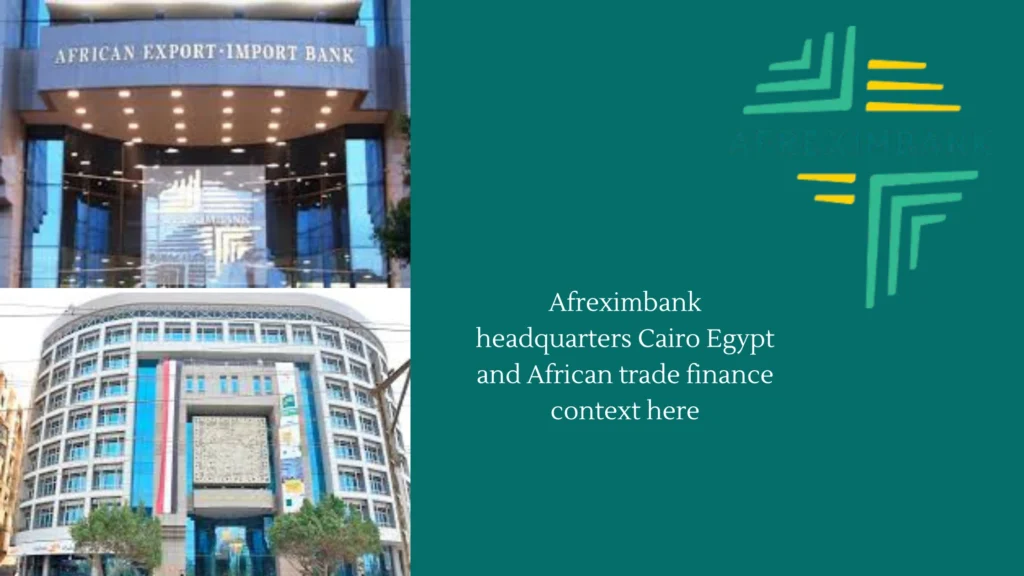
Afreximbank headquarters Cairo Egypt and African trade finance context here

The Internship at a Glance

DetailInformation
Program NameAfreximbank Internship Program 2026
LocationCairo, Egypt (primarily); other regional offices possible
Duration3–6 months
CyclesTwice yearly — January and June intakes
Monthly StipendUSD $1,000 (tax-free)
Housing AllowanceUSD $500/month (for relocating interns)
TravelReturn airfare covered
Induction HousingHotel (bed & breakfast) for first week
Airport TransferCovered on arrival and departure
Visa SupportProvided where required
Application DeadlineApril 30, 2026
ApplicationsRolling — accepted year-round
ModeIn-person only — relocation required

What Does the Financial Support Actually Cover?

Let’s be precise here, because the details matter.

Afreximbank is transparent about what it provides and what you’re responsible for. Here’s the honest breakdown:

What Afreximbank covers:

  • ✅ Return airfare — economy class, most economical direct route from your institution to the internship location
  • ✅ Monthly tax-free stipend of USD $1,000 — paid at end of each month
  • ✅ Housing allowance of USD $500/month — for interns relocating from their home countries
  • ✅ One week of hotel accommodation (bed and breakfast) during your induction period on arrival
  • ✅ Airport transfers — pick-up on arrival, drop-off at departure
  • ✅ Residence visa — arranged for the duration of the internship where required

What you’re responsible for:

  • ❌ Accommodation beyond the first week (your $500 housing allowance helps here)
  • ❌ Daily meals, transport, clothing
  • ❌ Medical insurance and group personal accident cover — this is important: you must provide proof of valid coverage before you start. Failure to do so results in automatic withdrawal of the offer.

That last point trips people up. The moment you receive a conditional offer, get your insurance sorted immediately. You have a two-week window to accept and provide documentation.

Who Can Apply? The Eligibility Checklist

The Afreximbank Internship is deliberately inclusive — but there are specific criteria you need to meet.

Academic Requirements:

  • ✅ Currently enrolled in a full-time undergraduate or postgraduate programme at a recognized institution
  • ✅ OR within one year of having completed such a degree
  • ✅ Strong academic record — this program is merit-based

Fields of Study (strongly preferred): Economics, Business Administration, Finance, Accounting, Social Sciences, Statistics, Law, Engineering, Sciences, or any related field. The key is relevance to trade, finance, and African development.

Nationality:

  • ✅ Nationals of Afreximbank member states (African Union member countries broadly)
  • ✅ Students of African descent in the diaspora
  • ✅ Non-African students whose vision for Africa’s transformation genuinely aligns with Afreximbank’s mission
  • ❌ Children of Afreximbank staff are not eligible

Age:

  • ✅ Between 20 and 32 years in the year of application

Language:

  • ✅ Fluent in English or French (working knowledge of the other is required)
  • ✅ Knowledge of Arabic or Portuguese is an added advantage

Notice the non-African eligibility. This program genuinely welcomes international students whose commitment to Africa’s development is real and demonstrable. If that’s you — make it clear in your Statement of Intent.

What You’ll Actually Do — The Internship Structure

One of the things that sets the Afreximbank internship apart from generic “shadowing” programs is how structured and rotational the experience is.

Here’s how the program works from day one:

Week 1 — Induction You arrive. You’re housed in a Bank-chosen hotel. You go through the Group’s full induction process — learning about Afreximbank’s mandate, operational model, subsidiaries, and culture. This isn’t a formality; it’s a genuine orientation designed to make sure you can contribute meaningfully.

Primary Department Placement After induction, the internship coordinator assigns you to a primary department and selects a dedicated mentor who will guide your work throughout the program. Real mentorship, not just an email address to occasionally email.

Rotational Exposure Throughout your internship, you’ll be rotated across departments in the Bank’s value chain. This is deliberately designed to give you breadth — you’re not just sitting in one team doing one task for six months. You see how trade finance, operations, risk, economics, legal, and other functions connect.

Final Report At the end of your internship, you write a report detailing what you’ve learned and — this is genuinely meaningful — how you intend to use that knowledge to promote the transformation of Africa and its diaspora. It’s a reflective exercise that connects your individual learning to the bigger picture.

Fields and Departments You Might Work In

The Bank’s operations span a wide range of disciplines. Depending on your background and the Bank’s needs at the time, you could be placed in areas like:

  • Trade finance and structured finance
  • Economics and research
  • Risk management
  • Legal and compliance
  • Business administration and strategy
  • Engineering-related project support
  • Social sciences and development analytics
  • Statistics and data management
  • Communications and corporate affairs

The rotational model means even if your primary placement is in one area, you’ll get exposure to others. That breadth is genuinely valuable for an early-career professional figuring out where they want to go.

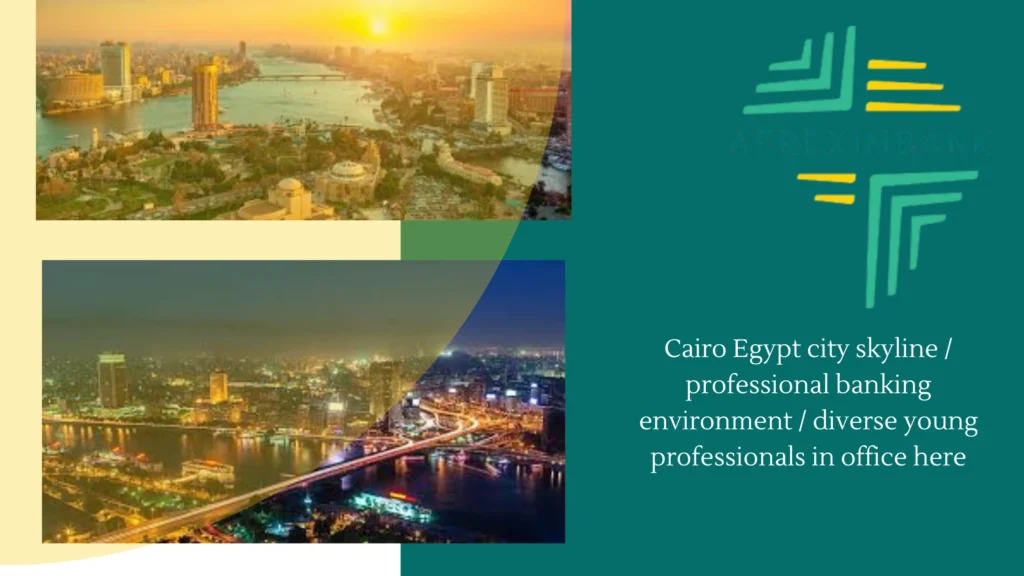
Cairo Egypt city skyline professional banking environment diverse young professionals in office here

Required Documents — Prepare These Now

Applications are submitted online and require the following:

  1. Completed online application form — filled out accurately and completely
  2. Letter of application — a formal cover letter explaining your interest and fit
  3. Updated CV — clean, current, and tailored to the internship
  4. Copy of valid passport — must be valid for the internship period
  5. Certified copies of academic certificates/transcripts — certified, not just scanned
  6. Recommendation letter from your institution — must include the proposed internship period (up to 6 months)
  7. Statement of Intent (maximum 1 A4 page) — explaining what you expect to gain and how it aligns with your career goals and Africa’s development

That Statement of Intent deserves special attention. It’s your chance to show the selection committee not just that you’re academically strong, but that you understand what Afreximbank does and why you specifically want to be part of it. Generic enthusiasm doesn’t cut it here.

FAQs — The Questions You’re Already Asking

Q: Is this internship fully paid? It’s well-supported but not entirely “fully paid” in the strictest sense. Afreximbank covers airfare, a $1,000/month stipend, $500/month housing allowance (for relocating interns), first-week hotel, airport transfers, and visa support. You cover your ongoing accommodation beyond the first week, daily meals, transport, and — critically — medical insurance.

Q: Can non-Africans apply? Yes. Non-African students are explicitly eligible if their vision for Africa’s transformation resonates with Afreximbank’s mission. You’ll need to make that case convincingly in your Statement of Intent.

Q: Is the internship remote or hybrid? Neither. It’s fully in-person. Relocation to Cairo (or your assigned location) is mandatory. If you can’t commit to that, this particular program isn’t for you.

Q: Can I intern more than once? No. Each candidate can only undertake the Afreximbank internship once.

Q: Does the internship lead to employment? Officially, no — and the Bank is clear about this. The internship does not guarantee or promise employment before, during, or after the program. What it does offer is exceptional experience and a network that can open doors independently.

Q: How does this compare to the African Development Bank internship?

FeatureAfreximbank InternshipAfDB Internship
LocationCairo (primarily)Abidjan + regional offices
Stipend$1,000/month + $500 housingMonthly stipend (amount varies)
TravelReturn airfare coveredOn-site interns cover own travel
Medical insuranceMust provide ownBank covers eligible interns
Duration3–6 months3–6 months
EligibilityAge 20–32, UG/PGMasters-level, under 30
ModeIn-person onlyOn-site or remote
International studentsYes (non-Africans welcome)Must be AfDB member state nationals

Both are prestigious. Afreximbank is slightly more accessible to non-African students and has a stronger trade finance focus. AfDB has a broader development mandate and more remote options.

Tips for a Strong Afreximbank Application

Since the selection is merit-based and competition is high, here’s what gives strong applications their edge:

On your Statement of Intent: Don’t just say you want experience in trade finance. Explain what draws you specifically to structured trade finance and African economic integration. Reference Afreximbank’s actual mandate if you can. Show you’ve done your homework.

On your CV: Highlight any coursework, research, or extracurricular activities related to economics, finance, or African development. If you’ve done any relevant project work, a thesis on trade, or any involvement with African economic organizations — lead with that.

On your recommendation letter: Brief your recommender. Tell them what the Afreximbank program is about and what specific qualities you want them to highlight. A generic “this student is excellent” letter is wasted potential.

On your language profile: If you speak French or any level of Arabic or Portuguese, make that visible on your CV and application form. It matters here more than at most institutions.

Apply early: Applications are rolling. The April 30 deadline is a cutoff, not a target. Earlier applications get reviewed first, and the cohort is limited. Don’t wait until April 29.

Why This Internship Is Worth Relocating For

I want to be honest about something: relocating to Cairo for 3–6 months is a real commitment. It’s not something to take lightly, especially if you’re covering your own ongoing living expenses beyond the stipend and allowances.

But here’s the thing. Cairo is a fascinating, historically rich, genuinely dynamic city — and Afreximbank’s headquarters location isn’t accidental. Egypt sits at the intersection of African, Middle Eastern, and Mediterranean economic activity. Spending months inside an institution that operates across that geography, working on real projects, rotating through departments, and building relationships with professionals from across Africa and beyond — that’s a qualitatively different experience from a domestic internship.

The Afreximbank network is also genuinely pan-African. The colleagues you meet, the professionals who mentor you, the alumni you connect with — they come from across the continent and its diaspora. For a young professional who wants to build a career in African finance, development banking, or international economics, that network has real and lasting value.

How to Apply — Step by Step

  1. Visit the official Afreximbank website — go to the Internship Opportunities section
  2. Confirm your eligibility — age, academic enrollment, field of study, nationality
  3. Prepare your Statement of Intent first — it takes the most thought and time
  4. Gather all documents — CV, passport copy, academic certificates, recommendation letter
  5. Complete the online application form fully and accurately
  6. Submit before April 30, 2026 — and ideally well before that

If you’re selected, you’ll receive a conditional offer and have two weeks to accept and provide proof of medical and personal accident insurance. Have that sorted in advance so you’re not scrambling.

The Bottom Line

The Afreximbank Internship Program 2026 is one of the most well-structured, genuinely rewarding paid internship opportunities available to young Africans and globally-minded students interested in trade finance and African economic development. The $1,000/month tax-free stipend plus housing allowance, covered airfare, visa support, structured mentorship, and rotational exposure across one of Africa’s most influential financial institutions — it’s a package that’s hard to match.

It’s competitive. It’s in-person. It requires relocation to Cairo. But for the right person — academically strong, genuinely curious about African trade and finance, and ready to commit — this internship is a genuine career launchpad.

The deadline is April 30, 2026. Applications are rolling. Earlier is better.

  • Apply at: The official Afreximbank website — Internship Opportunities section
  • Deadline: April 30, 2026
  • Location: Cairo, Egypt (primarily) Questions: Visit www.afreximbank.com for full program details

Know a student who’d be perfect for this? Share this guide with them — the right opportunity, found at the right moment, genuinely changes what’s possible.

Filed Under: FELLOWSHIPS

Next Page »

  • About us
  • Contact us
  • Privacy Policy