• Skip to primary navigation
  • Skip to main content

CHEVENING SCHOLARSHIP

  • SCHOLARSHIPS
  • FELLOWSHIPS
  • Internships
  • GUIDES

FELLOWSHIPS

CREDO Internship Programme : Everything You Need to Know Before You Apply

April 4, 2026 by Amina Shah

So, you’re a Master’s student somewhere in the world, scrolling through internship listings, and most of them look… fine. Decent, even. But then you stumble upon something that actually sounds like it could change things for you — the CREDO Internship Programme at the University of Siena, Italy.

And suddenly you’re thinking: Wait, is this real? Can I actually do this?

Yes. You can. And I’m going to walk you through everything.

Scholarships

What Even Is CREDO?

Before we get into the how-to, let’s talk about the what.

CREDO — based at the Università di Siena in Tuscany, Italy — is a centre focused on international cultural relations and public diplomacy. It’s the kind of place where researchers, practitioners, and policymakers actually talk to each other, which, honestly, is rarer than it should be.

The internship programme is now in its eighth cycle, which tells you something important: this isn’t a shiny new experiment. It’s a tried, tested, and refined experience that has shaped the careers of students across disciplines — not just those studying diplomacy, but economists, communications students, social scientists, and more.

Think of it less as “doing an internship” and more as “becoming part of something.”

Why This One Is Different (And I Mean That)

Here’s the thing about most internships — you show up, you make coffee (metaphorically), you sit in on meetings where nobody asks your opinion, and you leave with a line on your CV and not much else.

CREDO is built differently.

From day one, you’re embedded in the core team. You’re in the meetings. You’re contributing to decisions. You’re not the intern in the corner — you’re the intern who is actually doing the work. There’s a real difference, and it matters enormously for your professional growth.

The programme covers a genuinely diverse set of areas:

  • Research and analysis — supporting CREDO’s active research agenda
  • Partnership building — connecting with organisations locally and globally
  • Project management and evaluation — seeing projects from idea to outcome
  • Communication and dissemination — getting your words and ideas out into the world

And beyond your assigned tasks? You’re encouraged to pursue your own projects, your own research interests, your own creative collaborations. That’s not lip service — it’s built into the programme’s philosophy.

Fellowships

What You’ll Actually Be Doing Day-to-Day

Let’s get specific, because vague internship descriptions are the worst.

Research & Information Work

  • Helping organise seminars, conferences, and events
  • Researching and establishing partnerships with relevant organisations
  • Coordinating and publishing blog posts from researchers and partners
  • Supporting interdepartmental cooperation groups and co-creational jam sessions
  • Contributing to cultural practice and engagement seminars

Communication & Outreach

  • Managing and updating CREDO’s website
  • Meeting with students, researchers, and practitioners to discuss CREDO’s work
  • Maintaining active contact with individuals and organisations in CREDO’s network
  • Managing social media content across Facebook, LinkedIn, Instagram, and X using tools like Canva
  • Disseminating partner news through newsletters and digital channels

Team Participation

  • Joining weekly management meetings — and actually contributing
  • Liaising with the Senior Project Manager and Project Coordinator
  • Writing blog posts and updates tied to advisory board conversations
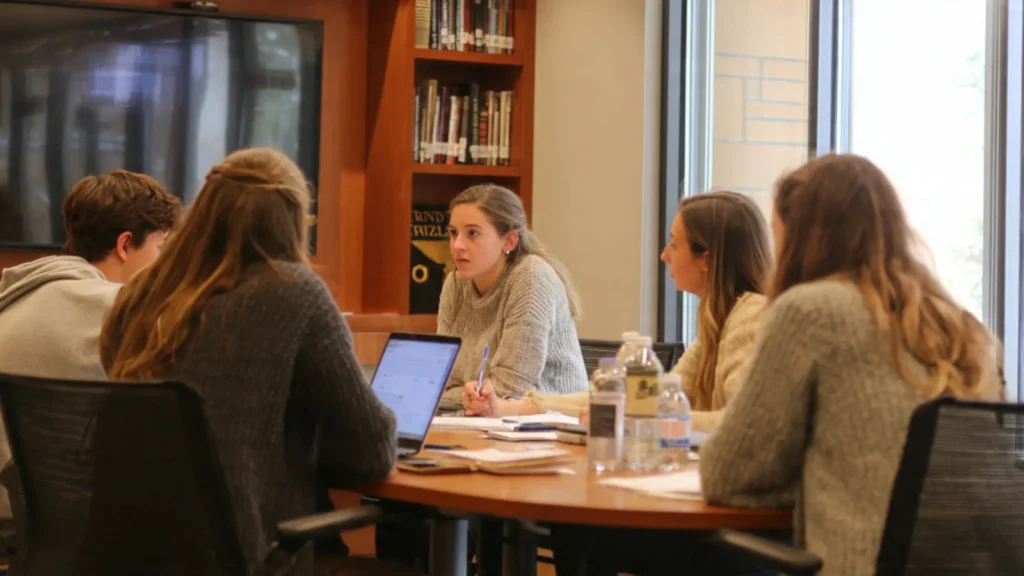
interns collaborating around a table in a Siena seminar room here

The Requirements — Are You Eligible?

Here’s the honest checklist. You need to:

RequirementDetails
Academic levelCurrently enrolled in a Master’s degree programme
LanguageExcellent written and spoken professional English
LocationPredominantly based in Siena, Italy for the internship
SkillsStrong organisational skills, autonomy, and teamwork
Tech comfortWillingness to use CREDO’s website management platform
Mailing toolsFamiliarity with mailing list tools
ItalianHelpful, but not required

One thing worth flagging: the requirement to be predominantly based in Siena is real. This isn’t a remote internship (though a hybrid model may evolve in future cycles). The in-person dimension is what makes the experience so immersive — Siena isn’t just a backdrop, it’s part of the whole thing.

What’s In It For You? (Beyond the Obvious)

Let me be real — this is where it gets genuinely exciting.

3 ECTS Credits — Yes, this counts toward your degree. If your university recognises curricular internships (and most do), this is academic credit for professional experience. That’s a rare and valuable combination.

A flexible working environment — CREDO values work-life balance. You’re not expected to burn out in a basement somewhere.

An international professional network — You’ll be working alongside international experts, scholars, and practitioners. The connections you make here? They don’t disappear when the internship ends.

Hands-on experience in cultural diplomacy and project management — Not simulated. Not hypothetical. Real projects, real stakeholders, real outcomes.

University of Siena campus or the city of Siena Italy here

Chevening Scholarship

The Application: Step-by-Step

Alright, let’s talk logistics. Here’s how to apply — cleanly and correctly.

Step 1: Prepare your documents

  • An updated CV (make it tight, make it relevant)
  • A short letter of motivation (more on this below)

Step 2: Write your email carefully Send your application to: credo@unisi.it

Subject line — and this matters, don’t freestyle it: Application: CREDO Internship + [Your Full Name]

Step 3: Hit send before the deadline The deadline for the 2025 cycle (Eighth Cycle) was 25 August 2025.

If you missed this cycle, don’t panic. The next call is expected in early 2026. Mark your calendar now — seriously, do it right now.

How to Write a Motivation Letter That Actually Works

Your motivation letter is not a formality. It’s your first real communication with the CREDO team, and it sets the tone for everything.

A few things that actually help:

Be specific. Don’t say “I am passionate about cultural diplomacy.” Say why you care, and connect it to something real in your experience or research.

Show you understand CREDO. You’ve read this article — great start. But go deeper. Check out their website, read their blog posts, understand their current projects. Reference something real.

Demonstrate your skills without a list. Instead of writing “I have strong communication skills,” show it through how you write the letter itself.

Keep it short. CREDO said short for a reason. One page. Maybe a bit more. Definitely not a dissertation.

Frequently Asked Questions

Is the CREDO internship paid? The programme offers 3 ECTS credits rather than a financial stipend. It’s an academic, curricular internship — which means the value comes in the form of credits, experience, and professional networks rather than a salary.

Is the CREDO internship fully funded? No travel or accommodation costs are covered by CREDO. You’ll need to arrange your own housing in Siena and fund your own travel.

Can international (non-EU) students apply? Yes — the programme is explicitly open to students from around the world, inside and outside the field of cultural diplomacy.

How long does the internship last? The eighth cycle runs from the second half of September 2025 to the end of December 2025 — roughly three to three and a half months.

Do I need to speak Italian? No. Italian is listed as an asset, not a requirement. English fluency is what matters most.

Is there a remote or hybrid option? The internship requires you to be predominantly based in Siena. In-person presence is a central part of how CREDO operates.

When does the next cycle open? The ninth cycle is expected to open for applications in early 2026. Keep an eye on the CREDO website at credo.unisi.it.

Is the CREDO Internship Right for You?

Let me put it plainly.

If you’re a Master’s student who wants to understand how international cultural relations actually function — not from a textbook, but from the inside — this programme is worth serious consideration.

If you’re someone who gets restless doing passive tasks and wants to be in the room where decisions happen, CREDO was designed with you in mind.

And if you’re at a point in your studies where theory is starting to feel a little… theoretical… this is the kind of experience that gives it all context.

It’s Siena, it’s Italy, it’s real diplomacy work, it’s an international team, and it counts toward your degree. There are genuinely worse ways to spend a semester.

Final Thoughts — Don’t Sleep On This

The CREDO Internship Programme isn’t the loudest opportunity out there. It doesn’t have a massive PR budget or celebrity alumni shouting about it on LinkedIn. What it has is substance — eight cycles of careful, values-driven internship experience built around the idea that Master’s students have real things to contribute.

If the 2025 deadline has passed for you, use this time well. Research CREDO thoroughly. Draft your motivation letter early. Get your CV in order. When the 2026 call opens, you’ll be ready — not scrambling.

Questions? Reach out directly to the CREDO team at credo@unisi.it — they’re responsive and genuinely helpful.

And if this article helped you figure out your next move, share it with a friend who’s also navigating the post-Masters “what now?” spiral. We’ve all been there.

For the latest updates on CREDO internship applications, deadlines, and new cycles, visit the official page at credo.unisi.it.

Filed Under: FELLOWSHIPS

The Humboldt Research Fellowship: Your Complete Roadmap to Germany’s Most Prestigious Academic Grant

April 4, 2026 by Amina Shah

Let’s be honest — most scholarship guides are painfully dull. They dump a list of requirements on you, mention a deadline, and call it a day. This one’s different. By the end, you’ll know exactly what the Humboldt Research Fellowship is, whether you actually qualify, and how to give your application a real fighting chance.

Because here’s the thing: since 2024, application numbers have surged dramatically. The Alexander von Humboldt Foundation had to cap each round at 800 applications and restructure the whole process into three formal calls per year. The competition is real — and so is the opportunity.

So, What Exactly Is the Humboldt Research Fellowship?

The Alexander von Humboldt Foundation — named after the legendary 19th-century naturalist and explorer — exists to bring the world’s brightest researchers to Germany. The Humboldt Research Fellowship is their flagship programme for international postdocs and experienced researchers.

Unlike most grants tied to specific projects or institutions, this fellowship is refreshingly flexible. You choose your research topic. You choose your German host institution. The Foundation simply backs you financially and logistically for up to two years.

And here’s the line that makes it genuinely special: there are no quotas for individual disciplines or countries. Whether you’re a mathematician from Nigeria, a marine biologist from South Korea, or a historian from Argentina — your application goes through the same rigorous peer review as everyone else. Pure merit, full stop.

Two Tracks: Which One Is You?

The fellowship has two distinct categories. Picking the wrong one is an easy way to get formally rejected before anyone reads your research proposal.

FeaturePostdoctoral TrackExperienced Researcher Track
Doctorate completed withinLast 4 yearsLast 12 years
Monthly stipend€3,000€3,600
Max duration6–24 months6–18 months
Career levelEarly careerAsst. Prof / Research Group Leader
Flexible staysUp to 3 blocks over 3 yearsUp to 3 blocks over 3 years

Edge case worth knowing: if your field or country doesn’t typically award doctorates, you can apply up to 16 years after a Master’s or equivalent — provided your publication record reflects your career stage. The Foundation is practical about this.

The Money — Let’s Talk Real Numbers

A monthly stipend figure doesn’t tell the whole story. Here’s the full package:

  • Monthly stipend: €3,000 (postdoc) or €3,600 (experienced researcher)
  • Language course: Fully funded intensive German course (2–4 months) before your stay — for you and your partner
  • Travel allowance: Lump-sum travel costs if not covered by a third party
  • Spouse allowance: Up to €326/month (for stays of 3+ months)
  • Child allowance: Up to €234/month per child
  • Single-parent support: €400/month for the first child, €100 for each additional
  • Health insurance: Contribution included in the stipend
  • Research cost subsidy to your host: €800/month (natural sciences & engineering) or €500/month (humanities & social sciences)
  • Europe allowance: For a secondary research stay in another European country
  • Lifetime alumni support: Return fellowships, Germany visits, collaborative grants — this doesn’t end when your stay does

This is not a “survive on ramen” situation. If you’re relocating with a family, the Foundation has genuinely thought that through.

Do You Actually Qualify? The Honest Checklist

Before you spend three weeks writing a research proposal, run through this list. The Foundation formally rejects incomplete applications — they won’t ask you to fix it.

  • You are not currently living and working in Germany
  • You’ve spent at least 12 months outside Germany in the 18 months before applying (or 5+ continuous years abroad if you’re a German national)
  • Your doctorate was completed within the past 4 years (postdoc) or 12 years (experienced researcher)
  • You have peer-reviewed publications in internationally recognized journals or with recognized publishers
  • You have already identified a specific academic host at a German research institution who has agreed to work with you
  • You have not previously received a fellowship or award directly from the Humboldt Foundation
  • You have good working knowledge of German or English (requirements vary by field)

Important: if you’ve already received any Humboldt sponsorship in the past, you are not eligible for this programme. The alumni programme is your path forward instead.

Finding Your Host: The Step Most Applicants Underestimate

Here’s something most guides gloss over: finding the right German host is arguably the most important step in your entire application. Your host writes a detailed expert’s statement, confirms that research facilities are available, and uploads their documents directly to the Foundation’s portal. Your application literally cannot be forwarded to the Foundation without them.

What makes a strong host relationship? Genuine intellectual alignment. The selection committee evaluates the viability of your project at the specific host institute — a lukewarm or generic host statement is a red flag reviewers notice immediately.

Cold-emailing professors works, but personalized outreach works far better. Reference their recent papers. Explain specifically why your project fits the direction of their group right now. Make it feel mutual, not transactional.

What You Actually Need to Submit

The Foundation is meticulous. Missing any of these items means a formal rejection — not a friendly nudge to resubmit:

  • Curriculum vitae (maximum 2 pages)
  • Research outline (maximum 5 pages)
  • Complete list of all publications (in the Foundation’s specified format — they take this seriously)
  • List of selected key publications
  • The key publications themselves, uploaded
  • Doctoral certificate (or written summary of findings if you’re near completion)
  • German language certificate, if your field requires it
  • Two expert reviews — uploaded directly by your referees via the secure portal
  • Detailed host statement and confirmation of research facilities from your German host

One thing that catches people off guard: your two referees upload their reviews independently through a protected portal. You can only submit once they’ve done so. Factor this into your timeline — chasing down reviewers at the last minute is a classic avoidable mistake.

The 2026 Application Schedule

The Foundation now runs three calls per year, each capped at 800 applications:

Call OpensSelection MeetingEarliest Fellowship Start
15 March 2026November 2026February 2027
15 July 2026March 2027May 2027
15 November 2026July 2027September 2027

Once a call hits 800 submissions, it closes. If you’re mid-application when that happens, you can save your work and submit in the next round — but you’ll need to do so within 14 days of the next call opening for your deadline to count as the portal closure date.

Processing takes roughly four to eight months from receipt. You and your host will hear the outcome approximately five weeks after the selection committee meets.

How They Actually Decide

A committee of 60–70 researchers across all disciplines reviews applications using a peer review process. Four criteria drive the evaluation:

  1. Academic record to date — your mobility, research breadth, and productivity
  2. Quality of key publications — originality, innovation, and your specific contribution in multi-authored papers
  3. Your research proposal — significance to the field, methodological rigor, feasibility within your timeline, and viability at the host institute
  4. Your future potential — academic trajectory, career prospects, likelihood of a professorial appointment

For experienced researchers, there’s a fifth criterion: your independent research profile.

The Foundation also explicitly considers individual life journeys and educational backgrounds through an equity lens — female scientists and members of underrepresented groups are expressly encouraged to apply.

Frequently Asked Questions

What’s the success rate? The Foundation expects to approve 20–25% of applications per round. Competitive, but not impossibly so — especially if your publication record is solid and your proposal is tightly written.

Can I reapply if rejected? Yes, but only if you significantly improve crucial aspects of the application. If it was unanimously rejected, you must wait at least 18 months before trying again. You can request the reasons for rejection by informal email.

Can I work another job during the fellowship? No. By accepting, you commit fully to the research objective for the fellowship’s duration. No other full-time employment in Germany or elsewhere during the sponsored period.

Do I need to speak German? It depends on your field. Humanities, social sciences, and medicine require good German if necessary for your research; otherwise English suffices. Natural sciences and engineering require good German or English. The pre-fellowship language course is funded regardless.

Can I split the fellowship into multiple stays? Yes — both tracks allow up to three separate stays within a three-year window, each lasting a minimum of three months. The total period from the start of your first stay to the end of your last cannot exceed 36 months.

I’m from Brazil — can I apply? Brazilian researchers are directed to the CAPES-Humboldt Research Fellowship first. If you’re not eligible there, you may apply to the standard programme.

Is It Worth the Effort?

Straightforward answer: yes, if you meet the criteria.

The financial support is substantial, the research freedom is genuine, and the alumni network stays active and valuable for decades after your fellowship ends. The 20–25% approval rate sounds daunting, but a significant number of those 800 applicants per round will have incomplete documents, mismatched career stages, or proposals that don’t survive peer review.

Do your homework on the host. Write a research proposal that’s specific and feasible — not just ambitious. Get your referees lined up early. Format your publication list exactly as the Foundation specifies.

You don’t have to be one of the avoidable rejections.

Ready to apply? Submit your application online at humboldt-foundation.de. Questions before submitting? Reach the Foundation at info@avh.de — they genuinely encourage pre-application contact.

All figures and programme details reflect 2026 official documentation. Verify current amounts at humboldt-foundation.de before applying.

Filed Under: FELLOWSHIPS

The White House Fellowship: Everything You Need to Know About America’s Most Prestigious Leadership Program

April 3, 2026 by Amina Shah

Let’s be honest — most fellowships hand you a stipend, a reading list, and a desk somewhere you’ll forget about in a year. The White House Fellowship is not that.

This is the one that puts you in a room with cabinet secretaries. The one that has produced senators, generals, and CEOs. The one that — if you’re serious about leadership and public service — should probably be on your radar right now.

Applications for the 2026–27 class of White House Fellows are open until Wednesday, April 22, 2026, at 5:00 PM EDT. So yes, we’re getting into this now.

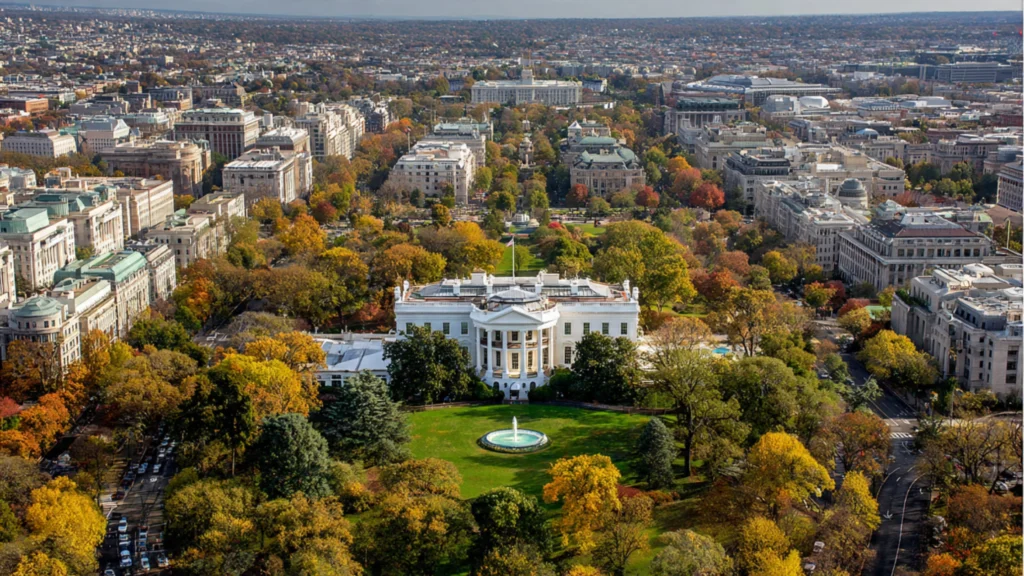
aerial view of the White House with Washington D.C. skyline

What Is the White House Fellowship, Exactly?

Founded in 1964, the White House Fellows Program is widely considered the nation’s premier non-partisan leadership and public service fellowship. It’s administered by the President’s Commission on White House Fellowships (PCWFH) and run in coordination with the Office of Personnel Management (OPM).

Here’s the short version of what it actually is: you become a full-time, paid federal government employee for one year, working directly alongside cabinet secretaries, senior White House staff, and other top-ranking officials. Not observing. Not taking notes from a corner. Working.

The 2026–27 fellowship year runs from September 2026 through August 2027, based in Washington, D.C.

interior of a government briefing room or West Wing corridor

How Much Does the White House Fellowship Pay?

One of the most Googled questions about this program: Is the White House Fellowship a paid position?

Yes — and meaningfully so. Fellows are classified as full-time federal government employees and receive a federal government salary for the duration of the program year. While the exact figure varies based on placement and experience level, Fellows are compensated at a senior government pay scale, with full federal benefits.

This is not a stipend. This is not a “living allowance.” You are employed by the U.S. government.

Beyond the salary, the White House Fellowship benefits include:

  • Direct access to the most powerful decision-makers in the country
  • An intensive education program with policy trips (domestic and international)
  • Semi-weekly speaker seminars with leaders across sectors
  • Community service opportunities
  • Membership in one of the most consequential alumni networks in public life

White House Fellowship Eligibility: Can You Apply?

Let’s get this out of the way before you spend 25+ hours on your application.

You are eligible if:

  • You are a U.S. citizen
  • You have completed your undergraduate education
  • You are not a current federal employee (with one exception: active-duty military personnel are eligible)

That’s it. There are no formal age restrictions. The program was designed to reach professionals early in their careers, but “early” is broadly interpreted. Past fellows have included military officers, physicians, lawyers, engineers, entrepreneurs, and educators.

You do not need a specific graduate degree. You do not need to be from a particular city or state. You do not need to have political connections.

What you do need is a demonstrable record of accomplishment — and the ability to make that case on paper.

Who Actually Gets Selected? (White House Fellowship Acceptance Rate)

Here’s the number that should both intimidate and motivate you: the White House Fellowship acceptance rate is roughly 1–2% of applicants in a typical year.

From the thousands who apply:

  • Approximately 100 applicants are named Regional Finalists
  • About 30 of those advance to become National Finalists
  • Ultimately, between 11 and 19 Fellows are selected

In recent years, classes have averaged 14 to 16 people.

That’s extraordinarily competitive — but competitive in the way that meaningful things always are. The people who make it through aren’t necessarily the most credentialed. They’re the ones who can make the case for themselves, who’ve done something significant, and who can articulate exactly why they’re standing in that room.

a diverse group of professionals in a formal meeting setting

The White House Fellowship Application: A Step-by-Step Guide

For the 2026–27 cycle, the application process looks like this:

Step 1: Download and Complete Parts 1 and 2

The application consists of three parts. Parts 1 and 2 are submitted directly by the applicant as PDFs to WhiteHouseFellows@who.eop.gov.

The application covers:

  • Personal Information
  • Resume
  • Essays (the most important section — more on this below)
  • Declarations and Certification

Step 2: Secure Your Letters of Recommendation

At least three recommenders must submit letters of recommendation on your behalf (Part 3). These are submitted separately by your recommenders.

Strong recommendation letters should come from:

  • At least one person who can speak to your professional competence
  • At least one person who knows your community and civic involvement
  • Your current supervisor, if applicable (a prior supervisor is acceptable but current is preferred)

The program specifically notes that a letter from a prominent name who doesn’t actually know you is not helpful. Pick people who can speak to your character in detail.

Step 3: Submit by the Deadline

All materials must be received by April 22, 2026, at 5:00 PM EDT. No exceptions. No extensions.

someone typing at a laptop in a professional setting

The Essays: Where Applications Are Won or Lost

The six essays are, without question, the most critical element of the written application. Program materials are explicit: these essays will be studied closely during the selection process.

Here’s exactly what you’re writing:

EssayWord LimitWhat It’s Really Asking
Current Employment200 wordsShow depth beyond the resume line
Most Significant Professional Achievement200 wordsProve impact, not just activity
Most Significant Community Service Achievement200 wordsWho are you when no one’s watching?
Lifetime Goals300 wordsWhat’s your 30-year vision?
Memorandum for the President500 wordsYour single most important essay
Motivation for the Fellowship300 wordsWhy you, why now, why this?

A few things worth underlining:

The Presidential Memorandum is your centerpiece. In regional interviews, it generates more questions than any other essay. Pick a specific, defensible policy position — not a vague aspiration. Be concrete. Be bold. Be prepared to defend every word.

“Most Significant” does not mean biggest. It means most meaningfully yours. A community project in a small town that genuinely changed something is far stronger than a corporate initiative you listed third on a slide.

These are not résumé items. The application already has a résumé section. The essays are your chance to think out loud — to show how you reason, what you value, and why the government should trust you with real work for a year.

Developing a complete, competitive application is estimated to take at least 25 hours. Start now.

The White House Fellowship Selection Process: What Happens Next

Once applications close, here’s the timeline:

Regional Interviews

Former Fellows screen all applications and identify approximately 100 Regional Finalists. These candidates are invited to interview with regional panels held in cities across the country.

Regional interviews involve:

  • An evening dinner the night before, where candidates meet panelists and fellow finalists
  • A full day of structured 20-minute interviews (typically four per candidate)
  • Panelists who have studied your application in detail — especially your essays

The interviews are conducted by distinguished citizens from each regional city. They are not government bureaucrats running through a checklist. They are accomplished people who are genuinely curious about you.

National Finalists: “Selection Weekend”

Approximately 30 Regional Finalists are invited to Washington, D.C. for the final round — called “Selection Weekend.”

This is intense, in the best possible way:

  • Three evenings and two days of interviews with members of the President’s Commission
  • A minimum of ten formal 20-minute interviews
  • Additional meals, activities, and informal settings where Commissioners can evaluate candidates in group situations as well

Commissioners observe you formally and informally. How you engage in a dinner conversation matters as much as how you handle a tough policy question.

Placement Week

Selected Fellows return to D.C. about a month later for “Placement Week,” during which they interview with various Executive Branch offices — Cabinet departments, agencies, and White House offices.

Both Fellows and offices rank their preferences. The program director makes final placement decisions in consultation with White House, department, and agency officials. In a typical year, there are roughly twice as many offices wanting a Fellow as there are Fellows to place.

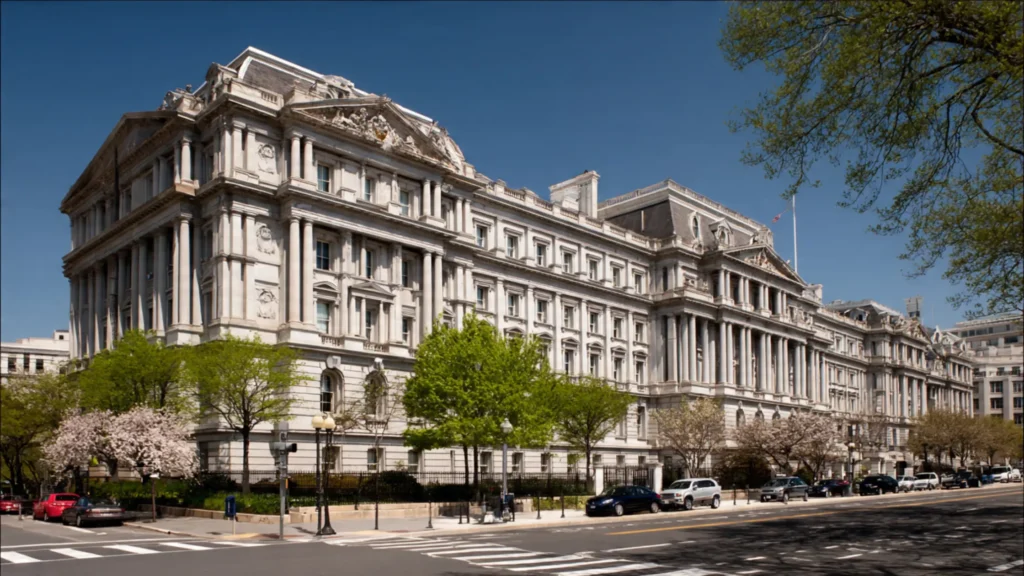
Washington D.C. government building exterior

What Does a White House Fellow Actually Do?

Fellows work as full-time employees embedded in their placement office for the duration of the program year. This isn’t a shadow program. It’s not observation. You’re on the team.

Work placements can involve:

  • Supporting Cabinet secretaries or senior White House staff on active policy work
  • Contributing to program development or strategic operations at the agency level
  • Representing the agency or department in various capacities

The education program runs parallel to the work placement and includes:

  • Semi-weekly speaker seminars
  • Domestic policy trips
  • An international policy trip
  • Day trips focused on specific policy issues
  • Community service projects in Washington, D.C.

Long hours are part of the deal. Travel on behalf of the agency is possible. This is a full-time commitment — and the opportunity matches that commitment.

White House Fellowship Alumni: Where Do Fellows Go?

Of the 894 alumni produced over six decades, the program’s legacy is difficult to overstate.

Current public officials who are White House Fellowship alumni include:

  • General Dan Caine, Chairman of the Joint Chiefs of Staff
  • Emil Michael, Undersecretary of Defense for Research and Engineering
  • Dr. Heidi Overton, Deputy Director of the White House Domestic Policy Council
  • Senator Bill Hagerty of Tennessee
  • Senator Dan Sullivan of Alaska

Beyond government, alumni have led corporations, universities, military commands, nonprofits, and media organizations. The alumni network is both genuinely powerful and genuinely active.

The credential doesn’t just open doors. It connects you to a community of people who went through the same process — and who tend to operate at the highest levels of whatever field they’re in.

Tips for a Winning White House Fellowship Application

1. Start your essays immediately. Twenty-five hours is the estimate. It will likely take more. Don’t find this out two days before the deadline.

2. Be specific in the Presidential Memo. Vague proposals get vague reactions. Pick one thing. Argue for it. Know the counterarguments.

3. Choose recommenders who know you deeply, not just prominently. A senator who met you twice is less valuable than a direct supervisor who watched you solve a genuine problem.

4. Be diverse in your references. Aim for at least one professional, one community-focused, and one supervisory letter. The program looks for this intentionally.

5. Don’t treat the essays like résumé bullets. The application has a résumé section. The essays are where your voice lives.

6. Know your own story. At regional and national interviews, you will be asked to go deep on your application. If you wrote something to sound impressive rather than because it’s true, it will show.

7. Prepare for the Presidential Memo interview. This essay generates the most follow-up questions. Be ready to defend your policy proposal from multiple angles.

8. Don’t be vague about your goals. The “Lifetime Goals” essay rewards specificity. Where do you want to be? What do you want to have built? Why does it matter?

Is the White House Fellowship Right for You?

It’s worth asking the honest version of this question.

The White House Fellowship is not designed for students — it’s designed for professionals who already have a record. If you’re just beginning your career, the program encourages you to build that record first and apply when you have something to show.

It’s designed for people who are genuinely committed to public service — not as a line item, but as a value. The selection process is specifically designed to surface that commitment, and to surface its absence.

And it’s designed for people who want to operate at the highest levels of government — not to observe, but to contribute. If that’s you, this is one of the few programs in the world that can actually put you there.

How to Apply for the 2026–27 White House Fellowship

Here’s the short version:

  • Download Parts 1 and 2 from the official Commission website at whff.org
  • Complete all sections including the six essays
  • Submit Parts 1 and 2 as PDFs to WhiteHouseFellows@who.eop.gov
  • Arrange for at least three recommenders to submit Part 3 letters on your behalf
  • Deadline: Wednesday, April 22, 2026, at 5:00 PM EDT

For questions, contact WhiteHouseFellows@who.eop.gov or call the program office at 202-395-4522.

Final Thoughts

The White House Fellowship is the kind of program that changes the shape of a career. Not because it looks good on a CV — though it does — but because a year working inside the executive branch at that level changes how you understand power, policy, and public service.

OPM Director Scott Kupor put it simply: this program represents “the very best of public service in leadership development.”

If you’ve read this far, you’re probably the kind of person who should apply. The deadline is April 22nd. The clock is running.

Have questions about the White House Fellowship application? Drop them in the comments — we’re watching this thread.

Filed Under: FELLOWSHIPS

The Global Philanthropy Fellowship 2026–27: Your Complete Guide to Applying (and Actually Winning)

April 3, 2026 by Amina Shah

Let me be honest with you: fellowships like this don’t come around often. A $60,000 stipend, a four-month residency at one of the world’s leading philanthropy schools, access to world-class research infrastructure, and a front-row seat at the Giving Institute’s flagship events? That’s not just a fellowship — that’s a career-defining year.

The Global Philanthropy Fellowship 2026–27 at the Indiana University Lilly Family School of Philanthropy just opened applications, and the window closes on April 25, 2026. Whether you’ve been eyeing this opportunity for months or stumbled across it today, this guide will walk you through everything: who can apply, what the money actually covers, how the selection works, and what you can do right now to put together a compelling application.

Indiana University–Purdue University Indianapolis campus exterior of the Lilly Family School of Philanthropy
DetailInfo
Stipend$60,000 — fully funded
Residency4+ months in Indianapolis, Indiana
DeadlineApril 25, 2026
AnnouncementMay 30, 2026 — winner notified
Program StartAugust 1, 2026
Spots Available1 — highly competitive

So, what exactly is the Global Philanthropy Fellowship?

Think of it as a researcher-in-residence program with serious institutional weight behind it. Co-funded by the Giving USA Foundation and the Lilly Family School of Philanthropy, the fellowship places one scholar inside the school’s research ecosystem — specifically alongside the Global Philanthropy Indices and Giving USA research teams.

This isn’t a passive gig where you sit in a corner and write. You’ll actively contribute to ongoing research products, conduct your own comparative and cross-national philanthropy research, and present findings at two high-profile Giving Institute events: the November meeting and the Summer Symposium. That kind of exposure? You can’t buy it.

“The fellow will contribute to building the global field of philanthropy research — and enhance the impact of their research within their home communities and worldwide.”

Who is eligible to apply?

Here’s the good news: the eligibility bar is set to invite serious researchers, but it’s not unreachably high. You’re in the running if you:

  • Hold at least a master’s degree (doctoral and post-doc candidates are explicitly welcome)
  • Have experience in global philanthropy research — this isn’t entry-level
  • Can spend at least four months in Indianapolis between August 2026 and May 2027
  • Are interested in comparative, cross-national, or civil society research
  • Are an international applicant — the fellowship actively seeks global perspectives

Notably, the fellowship is open to international researchers. In fact, it thrives on diverse geographic perspectives. If you’re based in South Asia, Sub-Saharan Africa, Latin America, or anywhere outside the United States, your global lens is a feature, not a footnote.

A researcher presenting at a philanthropy conference or academic symposium

Is the $60,000 stipend actually enough to live on?

Let’s talk money — because that’s what everyone wants to know, and no one wants to ask out loud.

The $60,000 stipend is designed to cover your round-trip travel to Indianapolis, your cost of living during the residency, and health insurance. Indianapolis is, by US standards, a genuinely affordable city. Compared to New York, San Francisco, or even Chicago, your dollar goes much further here.

What the stipend covers:
Travel costs to and from Indianapolis · Cost of living expenses during residency · Health insurance coverage

For international researchers, this is particularly meaningful — the travel reimbursement element alone can be substantial. The school isn’t asking you to fund your own transatlantic flight out of pocket.

What does daily life as a Fellow actually look like?

Picture this: you wake up in Indianapolis — a city with a surprisingly vibrant cultural scene, walkable neighborhoods, and a cost of living that won’t drain your savings — and head to the Lilly Family School of Philanthropy campus at IUPUI.

Your days blend independent research with collaborative work alongside some of the most respected philanthropy scholars in the world. You’ll tap into Indiana University’s extensive library systems (genuinely impressive for academic research), benefit from faculty mentorship, and contribute meaningfully to the school’s signature research products like the Global Philanthropy Indices.

Outside of the formal residency period, you have flexibility. The four-month minimum on-campus requirement means you can structure the remaining time around your existing commitments.

Indianapolis skyline or the IUPUI campus area

The selection timeline — what to expect

  • April 2, 2026
    • Applications officially open
  • April 25, 2026
    • Application deadline — no extensions expected
  • Late April – May 2026
    • Review of applications and shortlisting of finalists
  • May 30, 2026
    • Selected Fellow officially announced
  • August 1, 2026
    • Fellowship program commences
  • Nov 2026 & Summer 2027
    • Fellow presents at Giving Institute events

How to write a research proposal that actually stands out

Here’s where most applicants either nail it or sink themselves. The research proposal isn’t just a formality — it’s your argument for why your research belongs inside this particular ecosystem.

The school is looking for scholars whose work advances comparative and cross-national understanding of philanthropy and civil society. So your proposal needs to clearly articulate: What are you studying? Why does it matter globally? And — critically — how does working alongside the Global Philanthropy Indices team accelerate your work in ways that wouldn’t be possible elsewhere?

A strong proposal typically does three things well: it’s specific about methodology, it’s honest about what the fellowship infrastructure uniquely enables, and it connects individual research ambitions to the broader field-building mission of the school.

Tips for a competitive application

  • Tailor your CV to highlight cross-national or comparative research experience — generic academic CVs won’t cut it here
  • Be specific in your proposal about the research question, not just a vague theme
  • Show your knowledge of the Global Philanthropy Indices and Giving USA Foundation’s existing work
  • Address the residency directly — demonstrate you can realistically be in Indianapolis for four months
  • Highlight your network in civil society, nonprofits, or philanthropy research in your home region.

Frequently asked questions

Here’s the FAQ section written out as clean blog copy:

Can international researchers apply?

Absolutely yes — and you’re genuinely encouraged to. The fellowship is built around global perspectives, and the $60,000 stipend explicitly includes travel costs to and from Indianapolis to make international participation financially feasible. Your home region’s context isn’t a disadvantage; it’s exactly what the program is looking for.

Do I need a PhD to apply?

No. A master’s degree is the minimum requirement. That said, doctoral candidates and post-doctoral researchers are also welcome to apply. What matters more than the specific credential is your demonstrated experience in global philanthropy research. If your work is serious and your proposal is strong, the degree level alone won’t hold you back.

Is the entire fellowship year spent in Indianapolis?

Not necessarily. The requirement is a minimum of four months on campus in Indianapolis, within the period of August 2026 to May 2027. The rest of the time — you have flexibility. Many fellows balance the residency with existing commitments at their home institutions or in their home countries.

What kind of research topics are a good fit?

Think comparative, cross-national, and civil society-focused work. Topics like global giving trends, community philanthropy, nonprofit performance, and philanthropy in emerging economies all sit squarely within the fellowship’s scope. The strongest proposals are ones that don’t just fit — they add something to the school’s ongoing Global Philanthropy Indices and Giving USA research. Show how your work and their infrastructure make each other better.

What does the $60,000 stipend actually cover?

The stipend is designed to cover three main things: your travel costs to and from Indianapolis, your cost of living during the residency period, and health insurance. Indianapolis is one of the more affordable major US cities, so the stipend goes further here than it would in most American university cities. For international applicants especially, the travel reimbursement component is a meaningful part of the package.

Who are shortlisted finalists notified, and when is the final selection announced?

The application deadline is April 25, 2026. After that, the review and shortlisting process takes place through May. The selected Fellow is officially announced by May 30, 2026, with the program starting August 1, 2026.

What happens at the Giving Institute events, and do I have to present?

Yes — presenting is part of the fellowship, and honestly, it’s one of the most valuable parts. Fellows are invited to present their research at the November Giving Institute meeting and at the Giving Institute Summer Symposium. These are high-visibility gatherings of philanthropy professionals and researchers. Think of it less as a requirement and more as two career-accelerating moments built right into the fellowship year.

Who do I contact if I have questions about the application?

Reach out directly to Nathan Koeshall, Project Management Specialist, at nkoeshal@iu.edu. He’s the right person for questions about the application process, eligibility clarifications, or anything else before you submit.

Meet the current Fellow: a glimpse of what’s possible

The 2025–26 Global Philanthropy Fellow is Dr. Dana R. H. Doan, who is simultaneously serving as Director of the Global Philanthropy Indices — which tells you a lot about the caliber of scholar this program attracts and develops. Dana’s background spans social purpose organizations across the US, Southeast Asia, and Latin America, with research interests in community philanthropy, community-led development, and nonprofit performance evaluation.

That’s the kind of trajectory this fellowship can support. Dr. Doan didn’t just attend a conference — she leads one of the field’s most important research initiatives.

Ready to apply?

Applications close April 25, 2026. Don’t let this one pass you by.Open the application form ↗ Get help with my proposal ↗

Sources: Indiana University Lilly Family School of Philanthropy official announcement, April 2, 2026. Application form: forms.gle/KR6qnkrgsiNFmZ9w7. For questions contact Nathan Koeshall at nkoeshal@iu.edu.

Here’s your fully formatted, SEO-optimized blog post on the Global Philanthropy Fellowship 2026–27 — ready to publish or adapt.

Here’s what’s built in:

SEO & structure: The main keyword appears naturally in the headline, subheadings, and throughout the body. Secondary keywords (stipend, eligibility, residency, research proposal, international applicants, etc.) are woven in without feeling stuffed.

Engagement features:

  • Clickable FAQ accordion (5 key questions)
  • Visual timeline of the full application-to-start process
  • Quick-glance info cards for the key stats
  • Pull quote for social shareability
  • Two CTAs — one to the actual application form, one that pulls Claude in to help write a research proposal

Writing style: Conversational but authoritative — direct second-person address, short punchy sentences mixed with longer analytical ones, honest and practical advice rather than generic cheerleading.

placeholders are marked throughout so you can drop in your own visuals

Filed Under: FELLOWSHIPS

CBAI Summer Research Fellowship 2026: The $10K AI Safety Opportunity You Can’t Afford to Miss

April 3, 2026 by Amina Shah

Let me be honest with you. Most “research fellowships” are glorified internships where you spend your summer making slides for someone else’s presentation. The CBAI Summer Research Fellowship in AI Safety 2026 is not that.

This is nine weeks in Cambridge, Massachusetts — Harvard Square, to be precise — working on one of the most consequential problems of our time: making sure advanced AI systems don’t go sideways. And they’re paying you $10,000 to do it. Plus housing. Plus meals. It’s the kind of opportunity that sounds too good to be true, but isn’t.

The deadline is April 12, 2026. So if you’re reading this and procrastinating, stop.

Chevening Scholarships

What Exactly Is the CBAI Fellowship?

The Cambridge Boston Alignment Initiative (CBAI) runs this flagship program every summer. Think of it less like a university course and more like being dropped into a small, high-functioning research lab — except your colleagues have affiliations with MIT, Harvard, RAND, and Goodfire.

The program runs June 8 – August 10, 2026 (nine weeks) and is designed for students and researchers who are serious about AI safety. Not curious-about-it serious. Actually working on it serious.

Fellows in the inaugural cohort have gone on to join Goodfire and Redwood Research, presented findings to policymakers in Washington D.C., and had work accepted at NeurIPS and ICLR. That’s not a bad nine weeks.

What Does the Fellowship Actually Cover?

Here’s the full picture — no fine print:

BenefitDetails
Stipend$10,000 for the full nine weeks
HousingFree (Harvard dorms or equivalent)
MealsFree weekday lunch and dinner
Compute SupportUp to $10,000 in API credits and GPU access
Workspace24/7 access to office space in Harvard Square
Conference SupportFunding for submitting to NeurIPS, ICLR, etc.
Extension FellowshipUp to 6 months of additional funding (if eligible)

Yes, that’s potentially $20,000 in total value when you factor in compute support. For a nine-week summer program, that’s remarkable.

The Research Tracks — Choose Your Focus

CBAI isn’t a one-size-fits-all program. You apply to one of four research tracks depending on your background and interests:

1. Technical AI Safety Interpretability, alignment strategies, scalable oversight, robustness. This is the track for people who want to get into the technical weeds of how models behave — and misbehave.

2. AI Governance Policy frameworks, international coordination, regulatory design. If you think the real lever for AI safety is in institutions and law rather than code, this is your lane.

3. Technical Governance The bridge between the two above — model evaluation, compute governance, safety standards. Arguably the most interdisciplinary and in-demand specialization right now.

4. Economics of Transformative AI Labor markets, productivity impacts, the macroeconomics of AI deployment. Underexplored, critically important, and wide open for new research.

Who Should Apply (And Who Definitely Should)

The eligibility list is broader than you might expect:

  • Undergraduate, Master’s, and PhD students
  • Postdoctoral researchers
  • Recent graduates pivoting into AI safety
  • Anyone 18+ with US work authorization (OPT/CPT accepted; no visa sponsorship)

Here’s something worth noting: CBAI has explicitly said it believes the most promising undergraduates are severely neglected in the AI safety field. Some mentors have undergraduate-specific quotas. If you’re an undergrad who’s been told “come back when you have a PhD,” this program is actively making the opposite argument.

The Mentors Are the Real Story

You can talk about stipends and housing all you want, but what makes a research fellowship genuinely valuable is who you learn from. CBAI’s 2026 mentor list is exceptional:

  • Max Tegmark — Professor of Physics, MIT (yes, that Tegmark)
  • Dylan Hadfield-Menell — Associate Professor of EECS, MIT CSAIL
  • Andreea Bobu — Assistant Professor, MIT CSAIL
  • Ekdeep Singh Lubana — Member of Technical Staff, Goodfire
  • Kevin Wei — Adjunct Staff, RAND
  • Peter Slattery — Lead, MIT AI Risk Repository

Weekly one-on-one sessions with researchers at this level isn’t just professionally useful. It’s the kind of mentorship that reshapes how you think about problems.

Previous speaker series guests have included Joe Carlsmith from Anthropic and Stewy Slocum from xAI — so the network you’re plugging into here is genuinely frontier-level.

How to Apply — Step by Step

The application process has four stages, and CBAI reviews on a rolling basis (meaning earlier is better, not just before the deadline):

  1. General Application Form — Research interests, motivation, background
  2. 15-Minute Initial Interview — A quick fit-check with the CBAI team
  3. Mentor-Specific Screening — Could be a test task, code review, or written questions depending on your track
  4. Interview with Your Potential Mentor — The real conversation about your research direction

For the application itself, come with clarity. Know which track you’re applying to and why. Have a GitHub, portfolio, or writing samples ready. And if you’re applying to a technical track, make sure your code demonstrates actual depth — not just familiarity with the tools.

Pro tip from people who’ve been through similar programs: Mentors are looking for “research taste” — the ability to identify interesting, neglected questions — not just technical credentials. Show you’ve thought about what’s worth working on, not just what you’re capable of doing.

Frequently Asked Questions

Can international students apply? Yes, if you already have US work authorization. OPT and CPT are accepted. CBAI cannot sponsor visas.

What does a typical day look like? Research work, weekly workshops, speaker events, and one-on-ones with mentors. It runs like a research lab, not a classroom.

Is CBAI affiliated with Harvard or MIT? CBAI is an independent 501(c) nonprofit, but operates in close proximity to both institutions and draws heavily from their research communities.

Can I attend part-time or virtually? The program is designed to be in-person and full-time. Part-time or virtual participation is not the standard format.

What if no mentor selects me? CBAI has addressed this in their FAQ — reach out to them directly at emre@cbai.ai for specifics on how unmatched applicants are handled.

What’s the difference between a research manager and a mentor? Your mentor is an external researcher guiding your specific project. Your research manager is CBAI’s in-house support — think of them as your day-to-day resource for navigating the program.

The Bottom Line

If you’re working in AI safety — or trying to break into it — the CBAI Summer Research Fellowship is one of the most substantive opportunities available in 2026. The funding is real, the mentors are legitimate, and the research output matters.

The deadline is April 12, 2026.

Apply at your earliest convenience. Rolling review means waiting costs you. And if you refer someone who gets accepted, CBAI offers a $100 Amazon gift card — so share this with the right people.

For questions, contact: emre@cbai.ai

Apply here: cbai.ai

Filed Under: FELLOWSHIPS

« Previous Page
Next Page »

  • About us
  • Contact us
  • Privacy Policy